
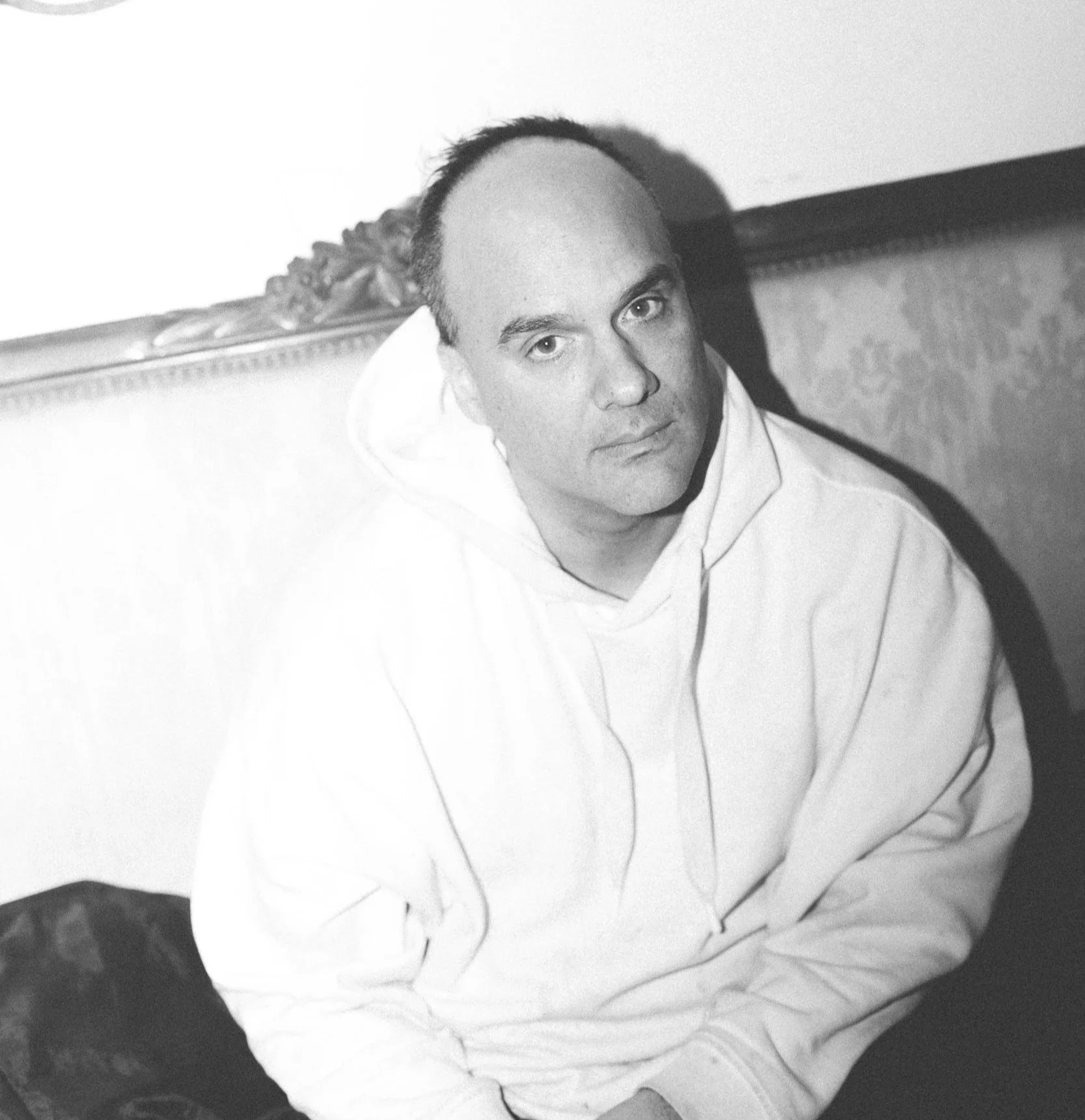
miguel andrade valdez
*
miguel andrade valdez *
MULTIDISCIPLINARY ARTIST
based in Lima
and
Urubamba Valley,Peru.
About the Work of
Miguel Andrade Valdez
Miguel Andrade Valdez is an artist based in the Sacred Valley and in Lima, Peru. He works in the borderland between sculpture, design and architecture but is also a painter and draughtsman. In his work, he reflects and comments on architecture and society, and investigates the cityscape and vernacular sculptures found in Lima and in many other Latin American cities. He sees sculpture as an archeology of our times and architecture as a representation of time.
In recent years he has started to merge inspiration from modern architecture with the pre-Colombian Huacas of Peru into sculptural works and has redefined his role as an artist to include architecture and design, notably by forming the design studio Taller Tarapacá that combines heritage craft with contemporary design. At the core of his work is the complex relation between the individual and the state, laid out already in Plato’s Socratic dialogue The Republic from the 4th C BC, and pervading human history. His plastic work is research based, but it’s a type of investigation that only can be made through the artistic process, and often involves collaboration.
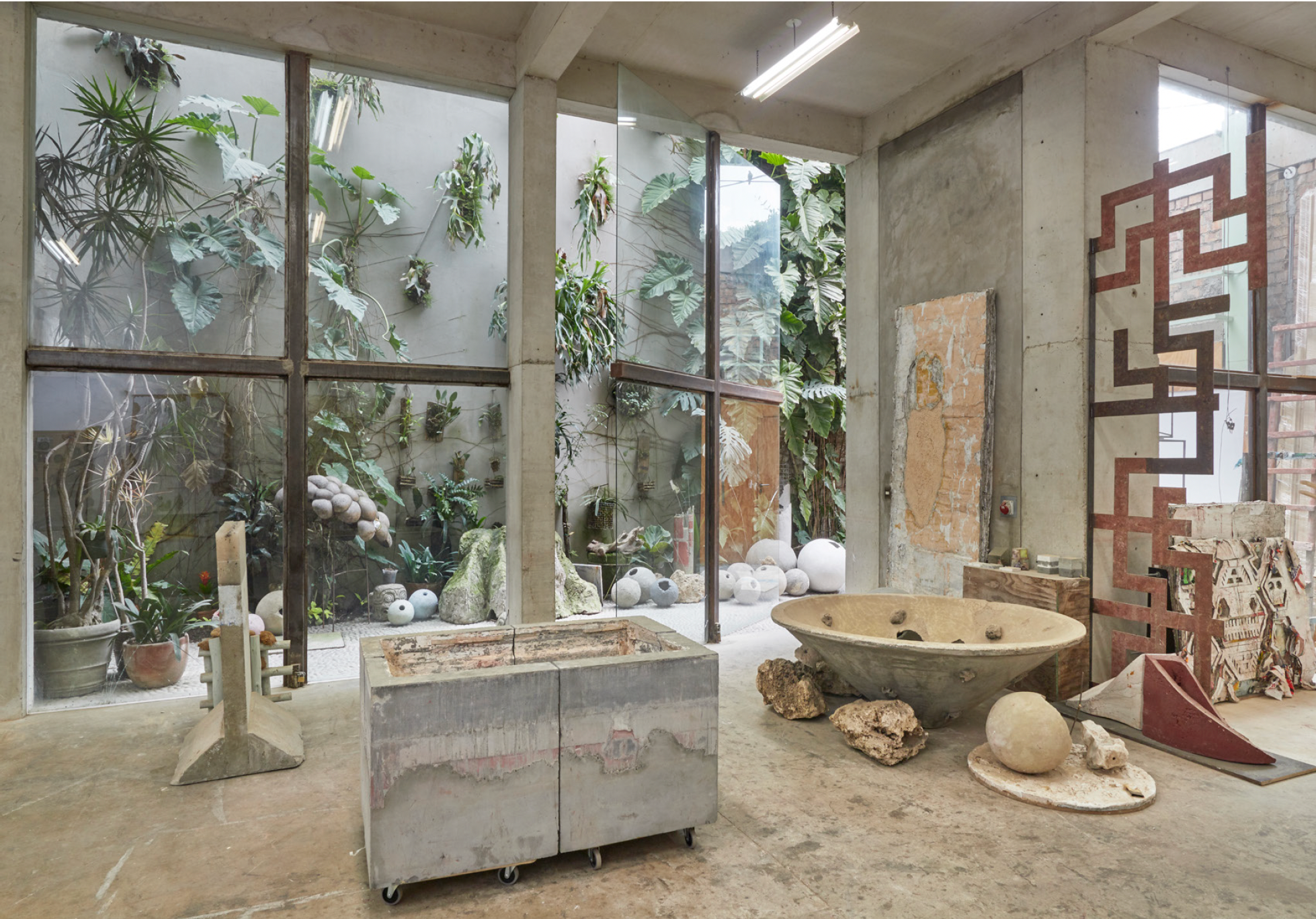
As a painter, Andrade Valdez looks inwards and outwards, merging portraiture with visceral paintings and drawings of bodies and imaginary landscape. This part of his practice is tied to his studio in the Sacred Valley of the Inkas in Peru, a studio that rises from an ancient house and is an artwork in its own right.
View Project →
Brutalism and Petroperu
Miguel Andrade Valdez’s research of Modernist and Brutalism architecture reflects on the ideologies behind major urbanism projects such as the reshaping of Mexico City for the 1968 Olympics. He references Uruguay artist Gonzalo Fonseca’s La Torre de los Vientos (Tower of the Winds) for his Péndulo y Plomada (Pendulum and Plumbing), 2015, and in Estratos (Strata), 2016, he literally recast parts of the Brutalism architecture of the headquarters of Petroperu, the state-owned petroleum company created in 1969 by expropriation of oil fields by the revolutionary leader General Velasco.
The 1968 Summer Olympics in Mexico City was the very first ever held in Latin America and became a turning point. New social ideals combined with a manifestation of specific Latin American culture, in its own right and with potent agency, inspired part by post-Bauhaus ideal, part by indigenous culture and architecture, joined to form a Modernism influenced by the geometrical forms and patterns of pre-Columbian culture. The graphic identity of the 1968 Olympics by Lance Wyman used a bold design that synthetized the pre-Columbian linear design into the modern branding of the games.
View Project →
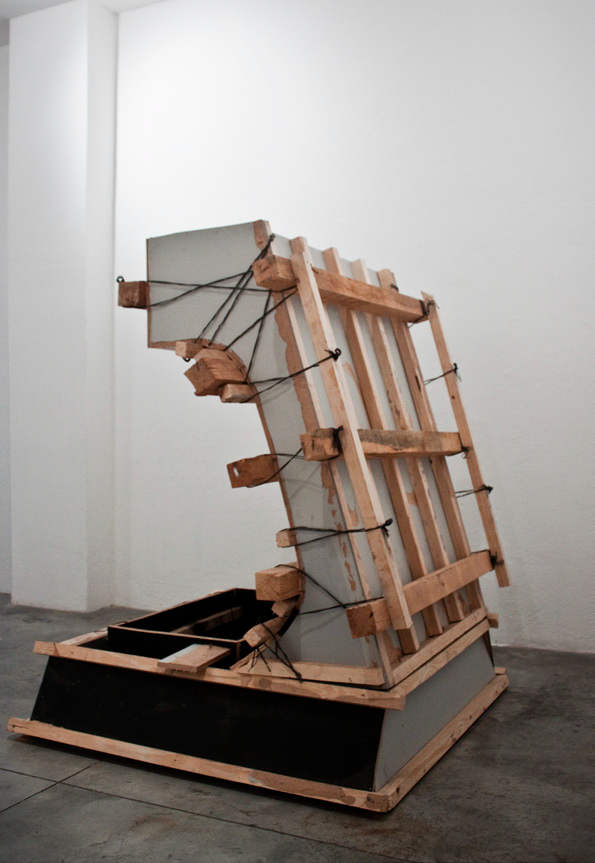
Just as Fonseca, who trained as an architect, Andrade Valdez bridges sculpture and architecture and uses the process of construction of the monumental concrete Brutalism architecture in several site-specific works. In Construção; La Biblioteca o El Universo (Construction; The Library or The Universe), 2018, he uses cast-in-place formwork for a staircase in the UTEC (Universidad de Ingenieria y Technologia) in Lima, turns it on its side, and invests it with the whole world – the Universe – in a reference to Jorge Luis Borges’s endless labyrinthine library.
View Project →
Monuments, Camp Followers and Construction Workers
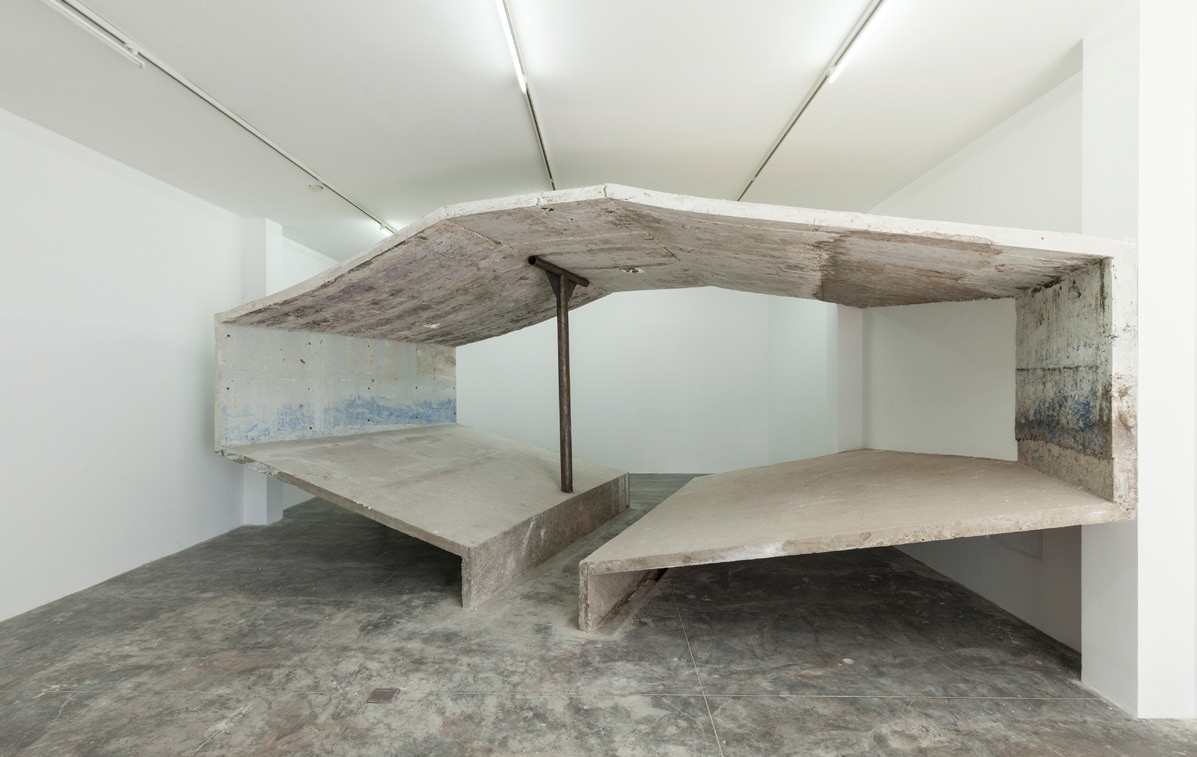
Construction also appears in the title of his Construção – La Rabona from 2013, a work conceived during a stay in Mexico City and inspired by a neglected monument in Lima. Andrade Valdez’ work hybridizes the concepts of La Rabona, the today mostly forgotten women camp followers that accompanied 18th century armies on campaigns, with Brazilian poet and singer Chico Buarque’s song Construção – released in 1971 during one of the most harshest periods during the country’s dictatorship and named the greatest Brazilian song of all times by the Rolling Stone magazine in 2009.
Miguel Andrade Valdez’ work consists of three cast-in-place formworks that differ in shape and size but all would produce the same final cast, just as Buarque’s song uses a structure with three different paragraphs that end up telling the same story of a construction worker that loses his life at work. In Andrade Valdez’s work the construction workers are the third part of the hybrid. Employing regular construction workers from Mexico to produce the work, they acted as individuals, as citizens, in solving the problem of how to build the framework for the monument – a representation of the state. When installed, the work prompts a reading of it as “ a ’system’ that builds ‘another’ form” as Andrade Valdez writes.
This mirrors Buarque’s song that criticized the oppressive state by singing about the manual laborers’ ruthless working conditions while constructing the monumental and aspirational buildings of the new era. The construction workers’ conditions do have a parallel in La Rabona, the humble camp follower that would never be acknowledged on the monument of victory and whose ‘invisible’ monument could potentially be cast by the frameworks of the installation. These complex relations between the individual and the state, the laborer and the ideologies behind modern architecture, are the themes at the core of Andrade Valdez’s work.
View Project →
A House for Living and Working
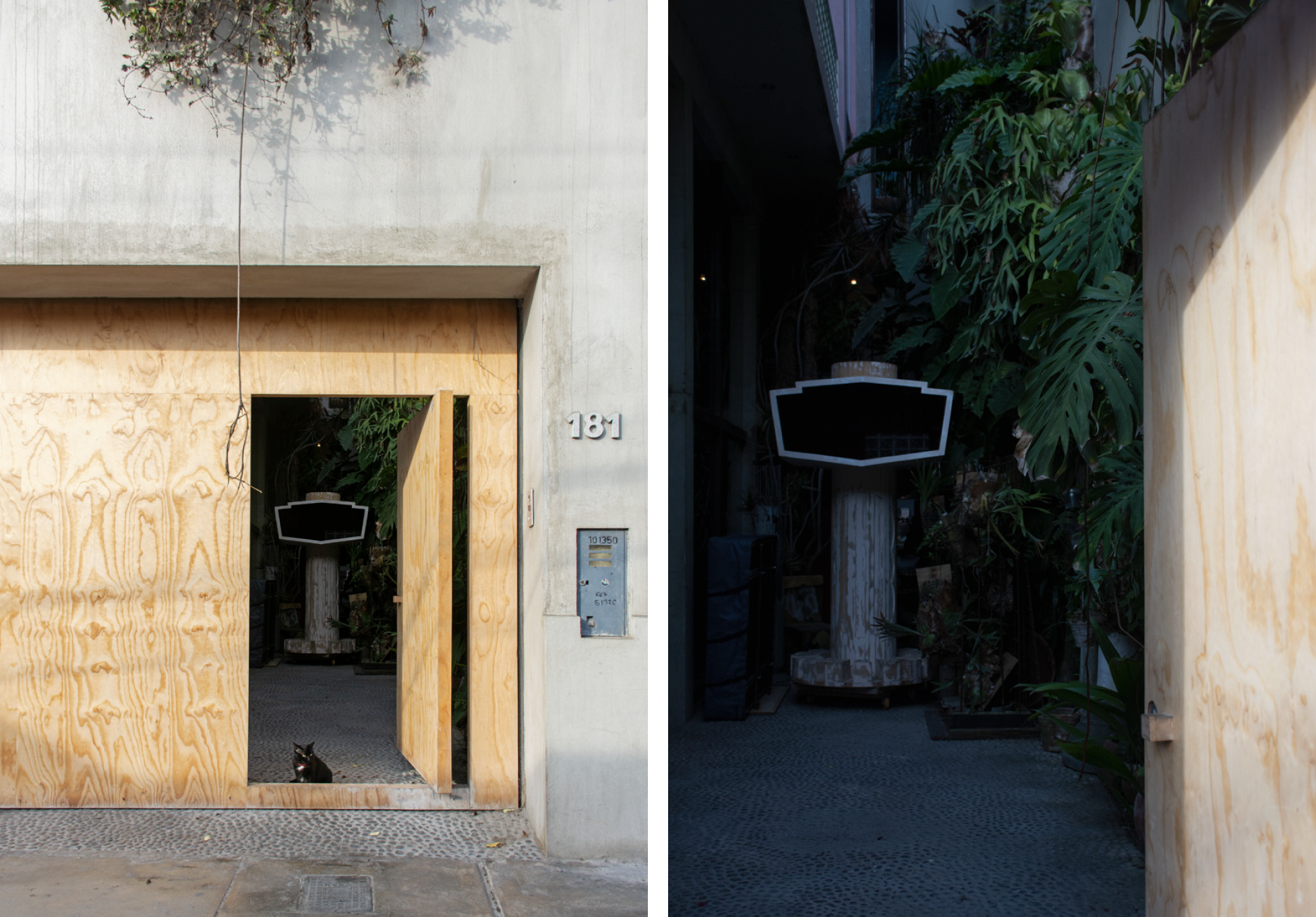
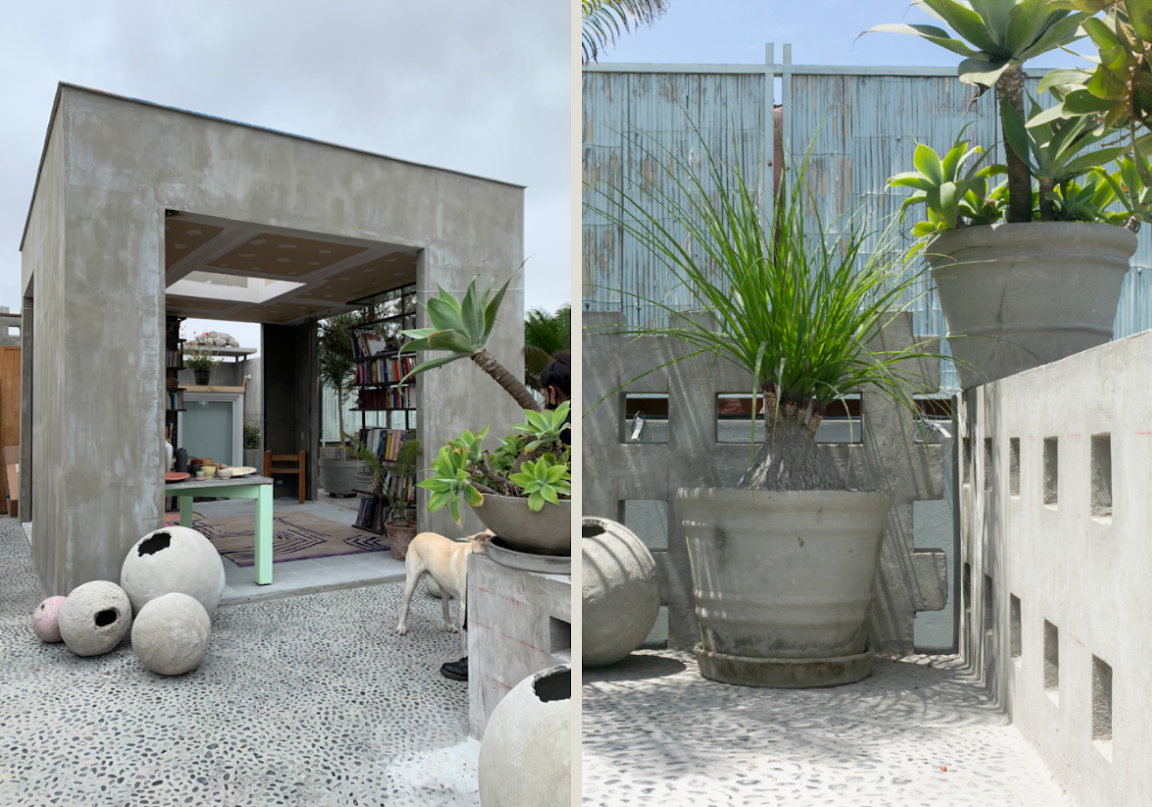
In 2014 he started the construction of the house that became both his living quarters and studio space. By taking on the role of architect and commissioner this marked a new phase in Andrade Valdez’ work. Set off a lively street in the Barranco neighborhood of Lima, the three-story house has gone through several experimental phases before settling as a family home and studio where he works together with his assistants and collaborators.
The Design Studio
He set up the design studio Taller Tarapacá together with his team in 2019 and today it engages top local craftspeople and designers to produce limited editions of textiles, ceramics and furniture out of wood.
By turning to local skilled craftspeople and merging contemporary design with heritage craft, Andrade Valdez has found ways to engage with the community and to give further agency to the cultural heritage of Peru while redefining what his role as a contemporary artist could be.
GO TO TALLER TARAPACA →

Sculptures from the Streets
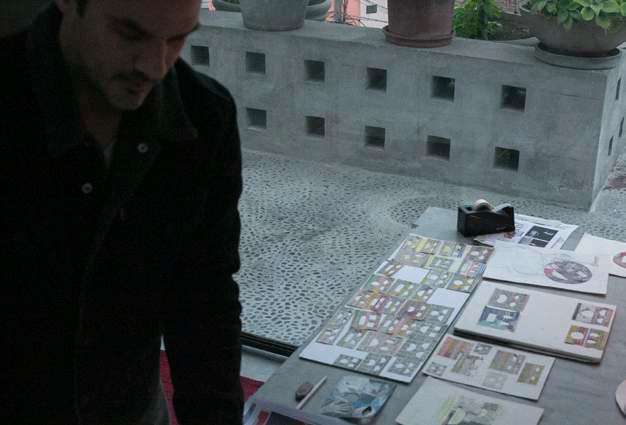
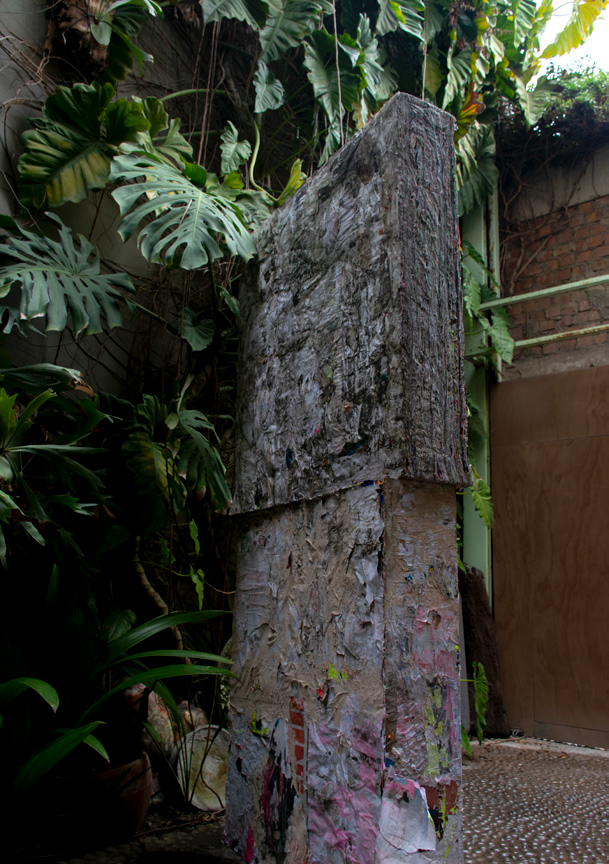
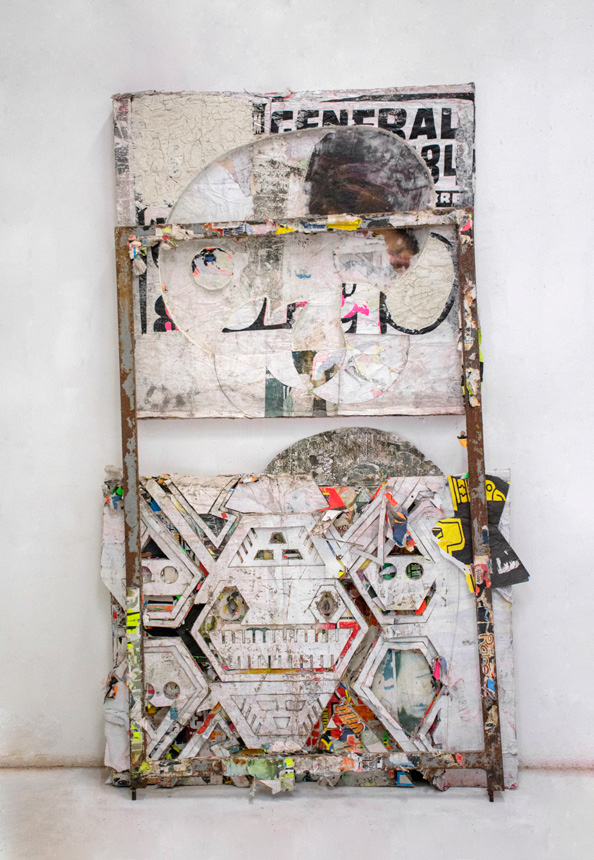
In recent years he has turned to paper and found paper from the streets of Lima as material for his sculptures. Layers of old posters or paper are built up into paintings and wall objects with relief-like geometrical patterns inspired by the ancient Peruvian pre-Columbian linear treatment. Andrade Valdez sees sculpture as an archeology of our times and architecture as a tangible way to represent time. Architecture can have monumental qualities, reflect the ideals of its time and stands for permanence – but Andrade Valdez’s large-scale architectural installation challenges this by their impermanence. In fact this type of installation is often destroyed after the exhibition.
Instead Andrade Valdez brings in a much longer perspective, beyond the dichotomy of pre-Columbian and Colonial times, inspired by geological time in which geological strata, over time pressed together to form something else, from prehistoric ferns to the black gold of the oil industry, or sedimentary stone speckled with fossil, compressed by immense forces and over endless time.
In particular, Andrade Valdez is inspired by the geological strata that form the landscapes around us – and translates them into the cityscape and the public spaces formed by our social, economical and political forces. Here the accumulation of information carried on humble posters for political parties and announcements for concerts, events and sales, form strata that encapsulate time.
During the 2020 – 2021 pandemic, the streets of Lima went quiet as the messages disappeared, the posting stopped and posters couldn’t form their usual strata or be harvested from the streets. A parallel to how layers in geological strata would tell of volcanic eruptions or draughts.
If his earlier works in the Muros series were colorful with an embodied micro cosmos of messages, his works from this period are made of mostly blank pages – the other side of the message – with subtle color variations on white that make the geometrical Peruvian pre-Columbian linear relief patterns stand out.
View Project →
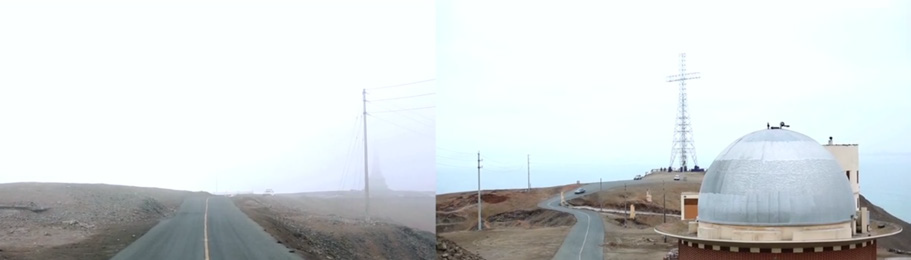
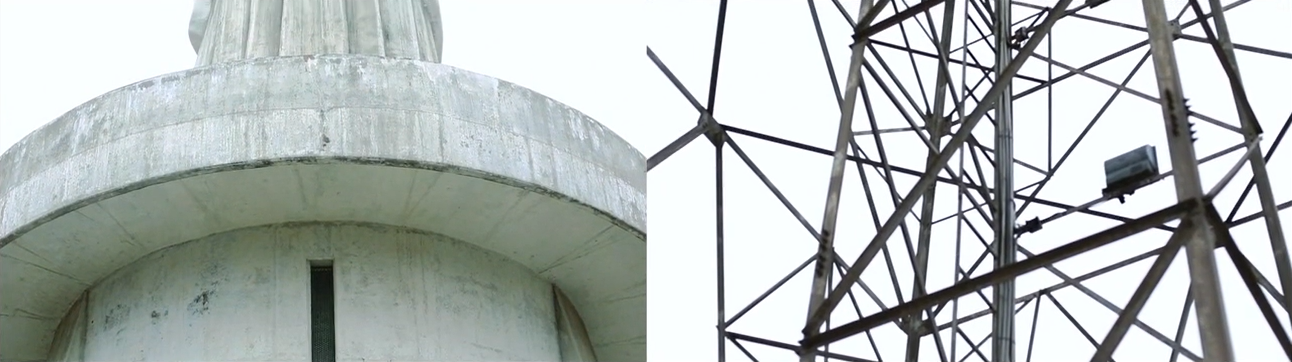
White Skies
White is the color of the light of Lima, of the sky, of the blank paper that waits to be filled. In 2014, Andrade Valdez made a 2-channel video titled Constelacíon, filmed on an arid promontory to the southeast of the city. Once the place for the bloodiest battle in the history of Peru, it remains inhabited by law. However it’s become a location for monuments; a sanctuary to the Virgin, the 2011 Christ of the Pacific, by some called the world’s largest unwanted sculpture, the Monument to the Unknown Soldier and the astronomical observatory, all flanked by expansive but empty parking lots.
Andrade Valdez shot the video like a road movie from a car traveling the solitary road that links the monuments that disappear into the whiteout of the sky. All the monuments are remnants of different systems that have held sway over a particular period, the political system that sent soldiers into an unwinnable battle, the Catholic Church, the Brazilian consortium that gifted the sculpture to the nation as a parting gift as former President Alan Garcia was leaving office and science that from the vantage point of the observatory keeps watch over the Universe.
View Project →
Memories in Figuration
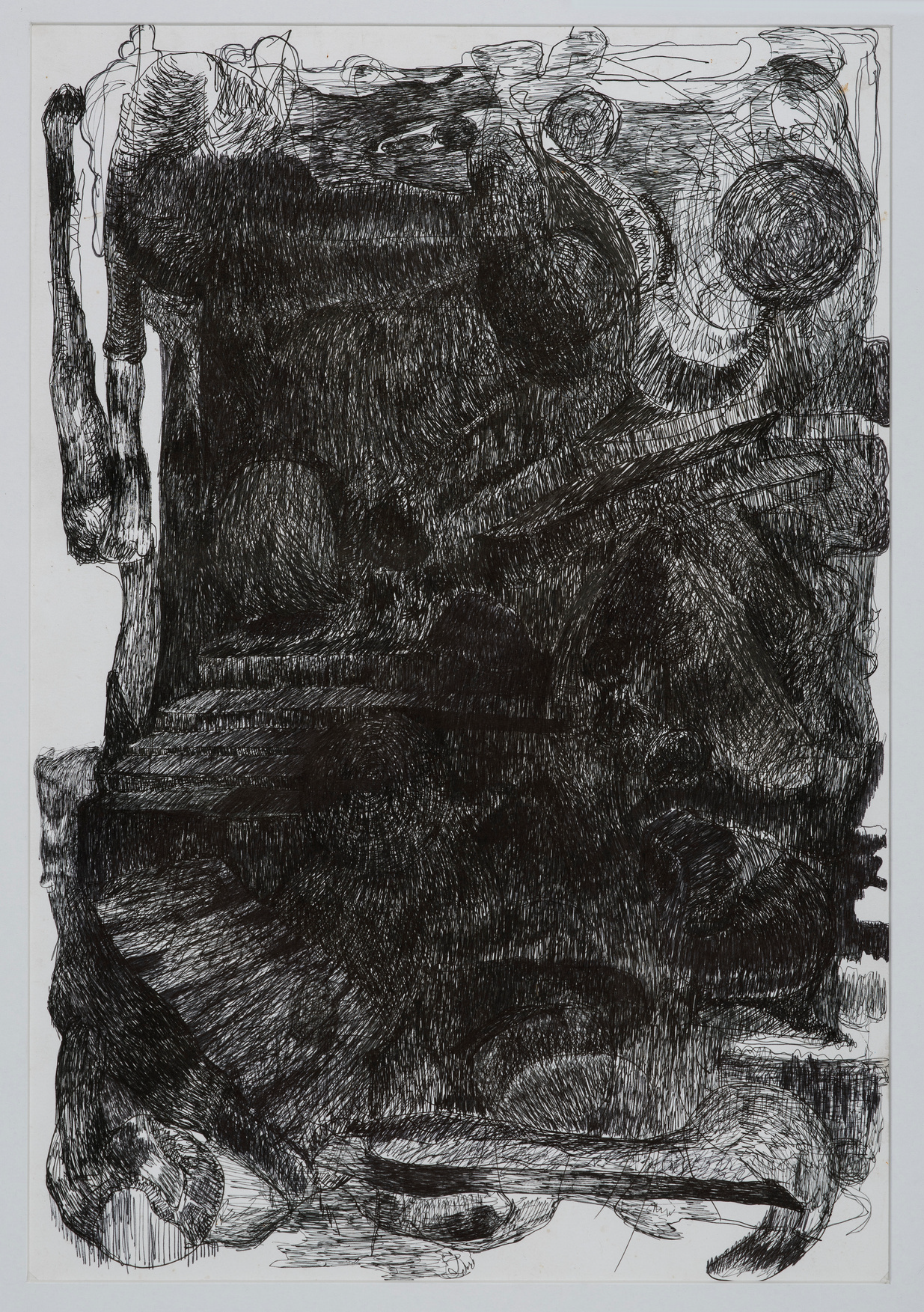
Andrade Valdez’ works across different types of media, and if his three-dimensional work tends to be abstract, he does bring in representation and figuration in some of his drawings such as the Costa Verde-series. Costa Verde is part of the coastline around Lima where he grew up. The dense and dark drawings are like rocks festooned with seaweed and molluscs, in which glimpses of personal memories of a violent and turbulent time take shape. His generation came of age during a difficult time in Peru that has deeply affected them.
For the artist, drawing opens up a personal space for memory and time, and a different way to, on a personal level, explore the relation between the individual and different versions of the oppressive state. Today Costa Verde, a place with a violent past, is part of an urban development. Andrade Valdez links the municipal management of the Costa Verde and the development of the nation to his own dark fantasies about the place that involve car crashes, suicides and caves.
View Project →
Painting and Sad Face
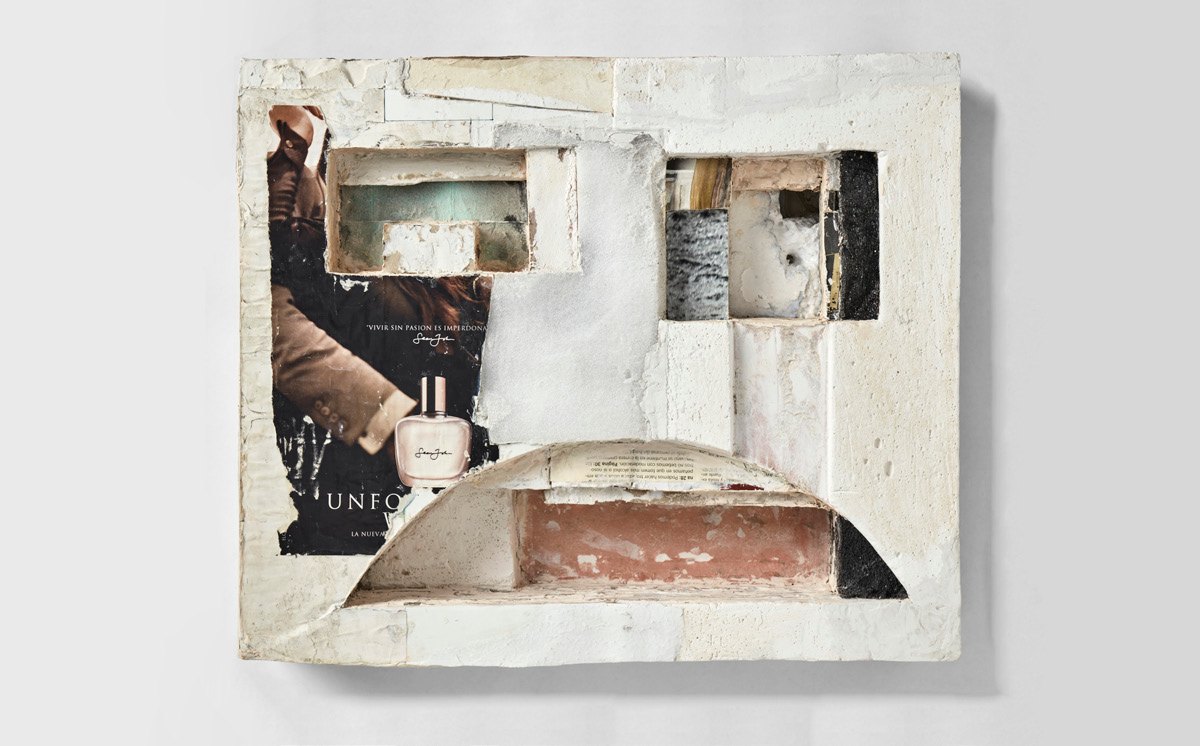
In his recent work Andrade Valdez is making a return to painting which he studied at the art faculty of Pontificia Universidad Católica del Perú (PUCP) in Lima. But it’s a different kind of painting now, developing his earlier sculptures using found and recycled paper form the streets of Lima, his recent works are layered with memories and different histories, just as the ancient pre-Columbian remnants of his hometown carry strata of more recent cultures and people that made their homes and lived their lives on top of the structures. He’s using collage as a strategy, builds up the relief-like panels out of paper, cuts out geometrical forms and allows images and figuration from the material to become part of the compositions – both retaining their “originality” and becoming part of something else, something new.
Collage, still radical after all those years, has always fascinated Andrade Valdez and to quote William S. Burroughs “When you cut into the present the future leaks out”. Just as the early Cubist collages of Georges Braque and Pablo Picasso, the method incorporates material and juxtaposes images from different worlds and time periods, a newspaper clipping is both an image from mass media and an element in a new context. The collage gobbles it all up and tells us that someone was here pasting, cutting, tearing, chopping up – as an indication of the process. These works of Andrade Valdez are meta collages that use volume to create lines and geometrical shapes but they work with two-dimensionality, the flatness of painting where everything exists simultaneously. The bulk, the white volume, is complemented by a pictorial layer in which figuration appears.
A recurrent motif in the reliefs is Sad Face, a simplified emoji-like human face that takes over the surface. Sad Face stares at us with empty eyes and a downturned mouth, it’s a face reduced to its most basic components that hides in the Peruvian pre-Columbian inspired pattern, “painted” with blotches of color from magazines that reveal other eyes, other mouths and hands that float around.
Specific for painting and especially these meta collages are the capacity to be about everything at once, they share space and time; pre-Colombian civilization, the emoji of that quick text, all the stories that are carried in paper going to recycling, yesterday's news and our current precarious emotional state, too complex to express in any other way than by a Sad Face and by letting a little bit of future leak out.
With Sad Face and the works in his recent series, Andrade Valdez doubles back to the 1968 Olympics in Mexico City and Lance Wyman’s graphic identity for the games. Cultural heritage, such as how the ancient pre-Columbian culture relied on a specific linear treatment in art and architecture, merged with contemporaneity it offer new ways to interpret and express our troubled times while engaging with the place we live and work in, just as celebrated Mexican architect Luis Barragán found his particular form of Modernism by fusing the European style with ancient local traditions.
View Project →
In the Studio
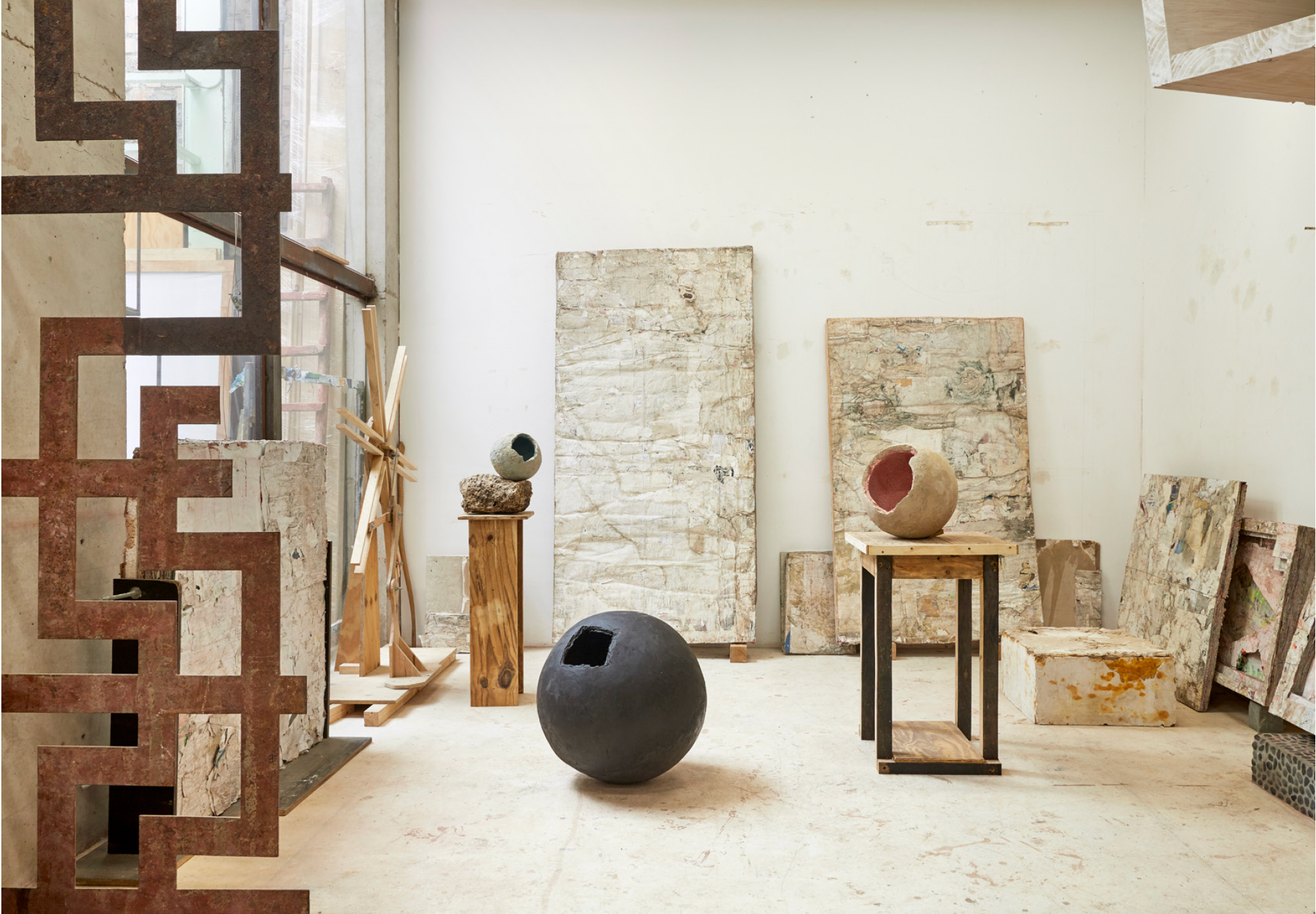
The heart for all his activities in Lima is his first floor studio and patio in the house that he built inspired in part by Luis Barragán. For Andrade Valdez, the movement to truly incorporate sculpture, architecture and design into a whole – a Universe – and specifically take on a role as a producer that engages with his community and society, his culture and history, on a long-term basis that goes beyond the regular project based economy of an artist’s studio is significant for his current and future practice.
View Project →
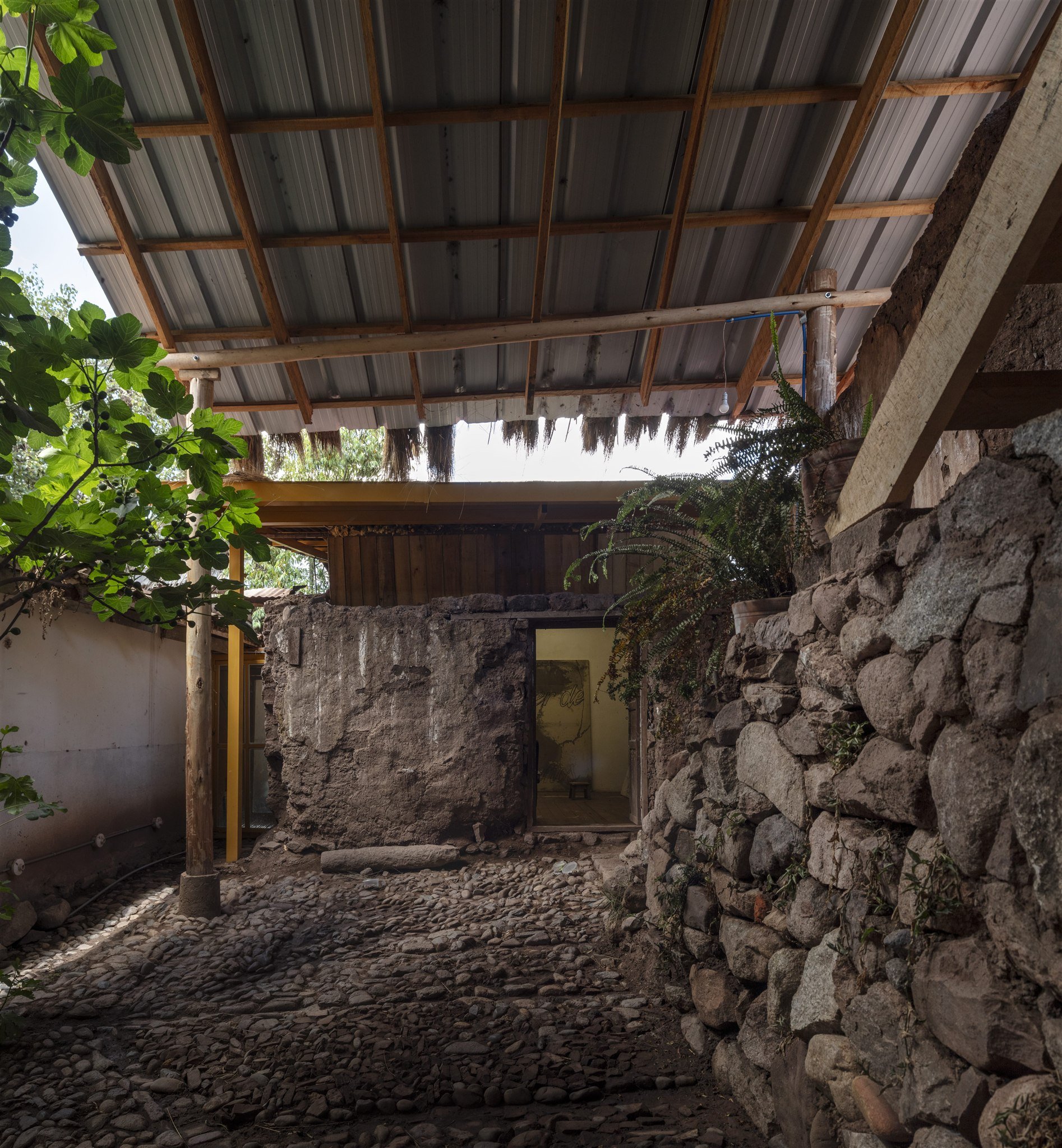
In 2022, Miguel Andrade Valdez established a second studio in the Sacred Valley. An ancient, partly ruined, building has been transformed into a home and several studios for painting, sculpture and craft projects.
Andrade Valdez has participated in international residencies such as NTU CCA Singapore, Obrera Centro and SOMA, both in Mexico City. He was born in 1979 in Lima where he lives and works. (Please see below for more information about Residencies and Exhibitions.)
View Project →
Sofia Bertilsson 2021- 2026
exhibitions
-
2023
La piel, N.A.S.A.L., Mexico DM.
2022"The Whiteness of the Whale", Solo show. Ginsberg Galería, Lima, PE
2021
"Plazas Vacías", Solo show. Galería N.A.S.A.L., Guayaquil, EC
"La Ciudad Tomada". Plaza de Santa Ana, Gran Canarias, ESP
2019
"Older than Satan", Group show. Centro Cultural Peruano Norteamericano ICPNA, Lima, PE
2018
“Corte de Tiempo”, Solo show. Galeria Luis Miroquesada Garland, Lima, PE
“Interestellar Raymondi”, Solo project. PARC, Lima, PE
2017
“Legado y diversidad: 78 años de artes en la PUCP”, Group show. Centro Cultural Peruano Norteamericano ICPNA, Lima, PE
“Proxima parade, Artistas peruanos en la Colección Hochschild”, Group show. Madrid, ES
“Monumentos, anti-monumentos y nueva escultura pública”, Group show. Museo de arte de Zapopán, Guadalajara, MX
“Monumentos, anti-monumentos y nueva escultura pública”, Group show. Museo Universitario del Chopo, Mexico City, MX
“Gresite”, Group show. Madrid, MX
2016
“Estratos”, Solo show. MATE Museo Mario Testino, Lima, PE
“Perucas”, Group show. Walden Gallery, Buenos Aires, AR
2015
“Sobreplano”, Solo show. Centro Cultural Peruano Norteamericano ICPNA, Lima, PE
“Adquisiciones y Donaciones 2012-2014. Parte II”, Group show. MALI Museo de Arte de Lima, Lima, PE
“THEOREME, You Simply Destroy The Image I Always Had of Myself”, Group show. MANA Contemporary, New Jersey. US
2014
“Concreto-Concreto”, Solo project. Art RIO, Río de Janeiro, BR
“Somos Libres”, An exhibition of artworks from the Mario Testino Collection. Group show. MATE Museo Mario Testino, Lima, PE
“BYOB”, Galería Luis Miroquesada Garland, Lima, PE
“Three times encrypted”, Group show. Galería 80 Metros Cuadrados, Lima, PE
“Desplazamientos”, Group show. Centro Cultural de España, Lima, PE
2013
“Construção - La Rabona”. Arroniz Arte Contemporáneo Gallery, Mexico DF “Escultura Subterránea”. Nueve Ochenta Gallery, Bogotá.
“La Plaza”. Group intervention in Barranco district. Lima
“Silver”. Group show. Revolver Gallery. Lima
“Lima04”. Group show. Museum of Contemporary Art MAC, Lima.
2012
“Monumento Lima”, Arthouse at the Jones Center. Austin, Texas, US
“Bajo el Sol de la Muerte”, Group show. Espacio Mínimo Gallery, Madrid, ES
“Art Public”, Group show. Art Basel - Miami Beach, Miami, US
“Revolver”, Group show. Nueve Ochenta Gallery, Bogotá, CO
“Espacios Quebrantados”, Group show. Arroniz Arte Contemporáneo Gallery, Mexico City, MX
“Colectiva Revolver”, Revolver Galeria, Lima, PE
2011
“Abstracciones Inciertas”, Revolver Galeria, Lima, PE
“Difracción”, Group show. Arroniz Arte Contemporáneo Gallery, Mexico City, MX
“Bruma”, Group show. 20 Hoxton Gallery, London, UK
2010
“El Fin del Principio”, Group show. Patricia Ready Gallery, Santiago Chile, CL
2009
“Éxtasis”, Revolver Galeria. Lima, PE
“Grandes Expectativas”, Group show. Centro Cultural Peruano Norteamericano ICPNA, Arequipa, PE
2008
“Estudio”, Revolver Galeria, Lima, PE
“La construcción del lugar común”, Group show. MAC Museo de Arte Contemporáneo, Lima, PE
“La piel de un río”, Group show. Art Museum San Marcos, Lima, PE
2007
“Popular-pop”, Group show. MALI Museo de Arte de Lima, Lima, PE
“Frontera, Under The Skyland” Group Show. Vértice Galería, Lima, PE
2006
“ECO”, Lucia De la Puente Gallery, Lima, PE
“El Nombre del Padre”, Group show. Galería Luis Miro Quesada Garland, Lima, PE
“Urbe y Arte”, Group show. Museo de la Nación, Lima, PE
“Cambios Estructurales”, Group show. Art Museum San Marcos, Lima, PE
“Solvet Et Coagula”, Group show. Galería 80 metros cuadrados, Lima, PE
2005
“Omnívoros”, Ninth Festival of Electronic Arts in Peru. Centro Cultural De España, Lima, PE
“PULSO”, First Festival of Performance in Peru. Centro Cultural Peruano Norteamericano ICPNA, Lima, PE
“The Soft Machine”. Group show, Artco Gallery, Lima, PE
2004
“IN OUT”, Plataforma Festival of Contemporary Art, Lima, PE
2003
“Fábricas De Aire”, In collaboration with Raura Oblitas, Jaime Oliver and Verónica Luyo. Casa Drama, Lima, PE
2002
“Histerógena”, A performance of the group project Sirenética. Centro Cultural Peruano Norteamericano ICPNA, Lima, PE
STUDIES/RESIDENCIES
-
2019
Residency at SOMA – Mexico City, MX
2017
Residency at NTU CCA Singapore, SG
2016
Residency at Obrera Centro – Mexico City, MX
2012
Residency at SOMA – Mexico City, MX
1999—2005
“Pontificia Universidad Católica del Peru” – Fine Arts, Specializing in Painting – Lima, PE