
The Whiteness of the Whale or La blancura de la ballena, Ginzberg, Lima
The Whiteness of the Whale or La blancura de la ballena
The whiteness of the whale is also the white light of Lima. In Herman Melville’s novel Moby Dick captain Ahab eventually loses his battle – or shall we say personal Vendetta – against the mythical whale. One cannot revenge Nature, but as we know we can hurt it beyond redemption. The whales know it, the planet too.
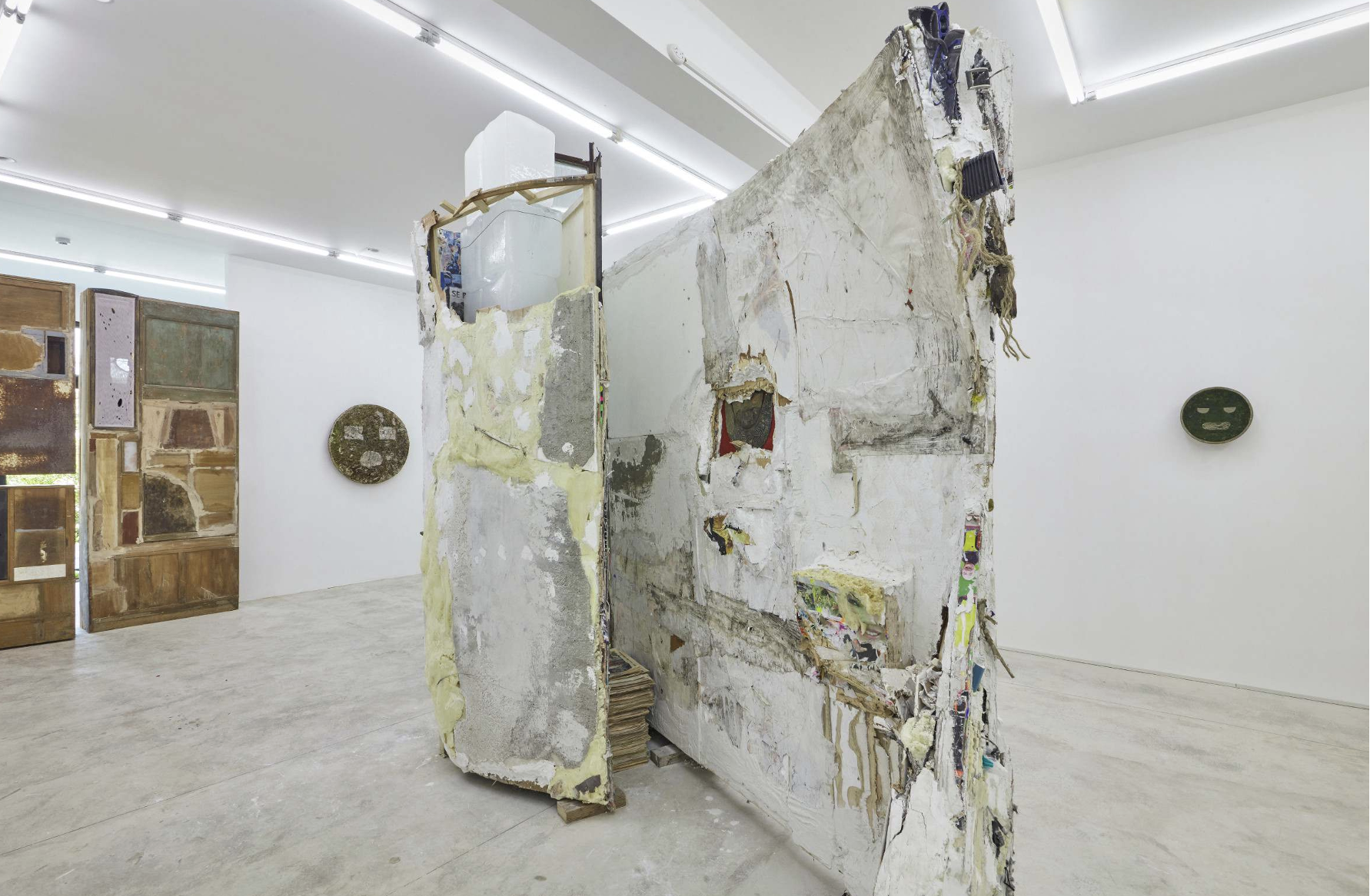
During the pandemic Miguel Andrade Valdez and his team in the studio embarked on a journey that turned into a new body of works, in which sculptures and wall objects take on a simple figuration gleaned from equal parts emojis and pre-Columbian imagery. The simple figurations speak to us and make us feel and identify with the works as carachters in a play, they stand in contrast to the more the abstract works that seemingly have come together from the refuse of the streets of the city and the polluted oceans.
There is a tension between the warm and nurturing environment of our homes, that suddenly transformed into our own prisons, and the common social spaces of our cities and streets, and in a wider sense, the world we live in, threatened by climate change. The gates protect and imprison, they embrace and smother like love and family. Once we step inside, inside is outside and vice versa. Surrounded by a strange group of onlookers, stands a tall, hunkering sculpture, part creature, part shipwreck, 100 % unnatural, that reminds us both of a monster that has risen up from the swirl of plastic in the oceans and something surreal from our collective subconscious.
The works in the exhibition The Whiteness of the Whale, is a continuation of Andrade Valdez’s strong interest in urbanism and how cities reflect social and political situations as well as the accumulation of strata from Millenia just as the Huacas of Lima poke through the layout of the contemporary city. Outside the gallery, Andrade Valdez, in collaboration with Diana Ortega Garagatti, has created a small patio, a place to gather, meet and reflect, reminding us of how important these functions are for us and our cities.
Captain Ahab’s quest was a metaphorical one, to find meaning, God or whatever your own quest is as a reader, but the narrative also points to the collective as opposed to the self and solipsism. No man is an island, as John Donne wrote, and continued, entire of itself; every man /is a piece of the continent, a part of the main/.
Essay by Sofia Bertilsson, 2022
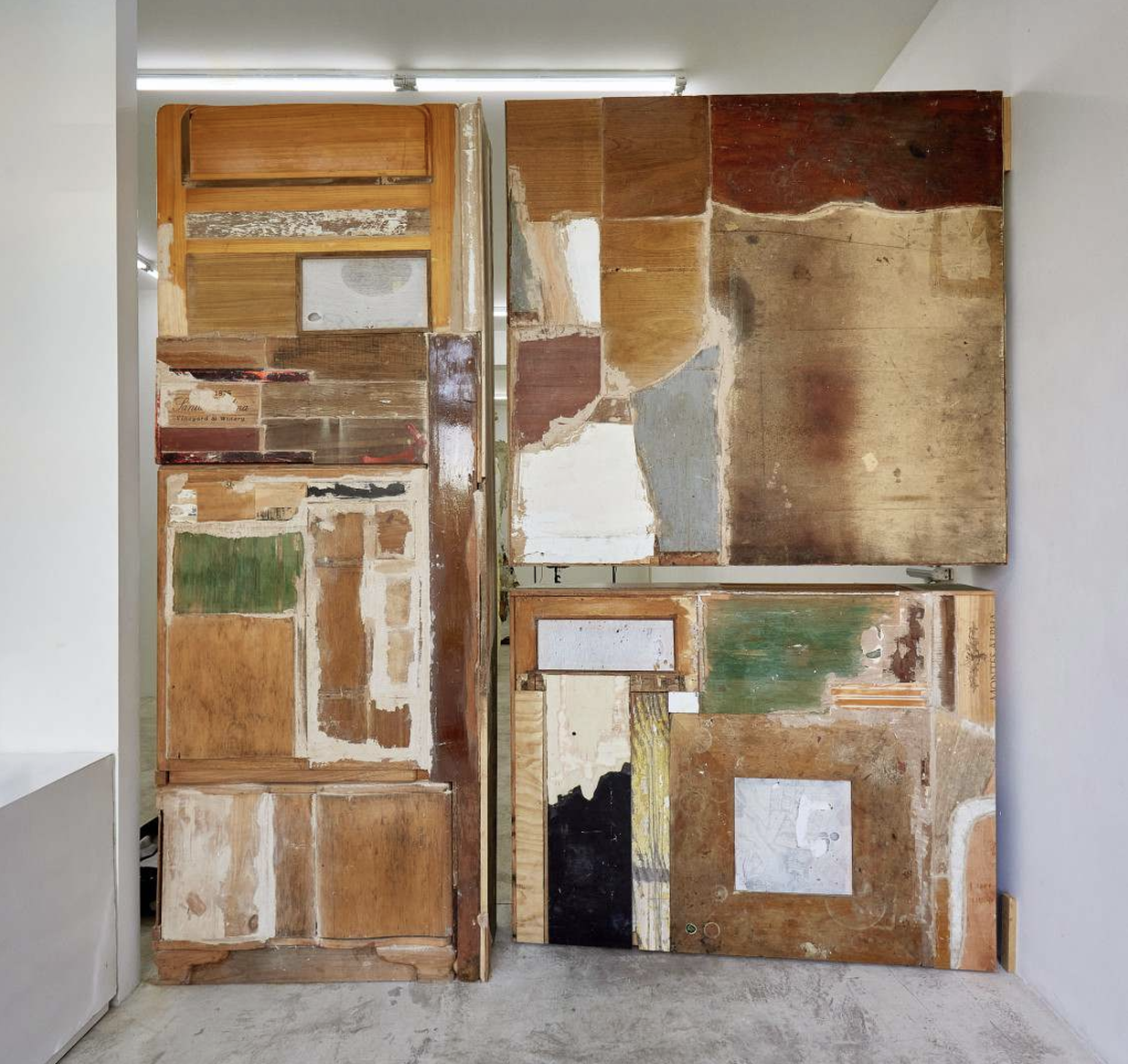
El Padre y la Madre. El Hermano Mayor. El Hermano Menor 2022 Pedazos de muebles, masillas, clavos y retazos de telas. Medida variable.
The Father and the Mother. The Older Brother.The Younger Brother | 2022 | Pieces of furniture, putty, nails, and fabric scraps | Variable size
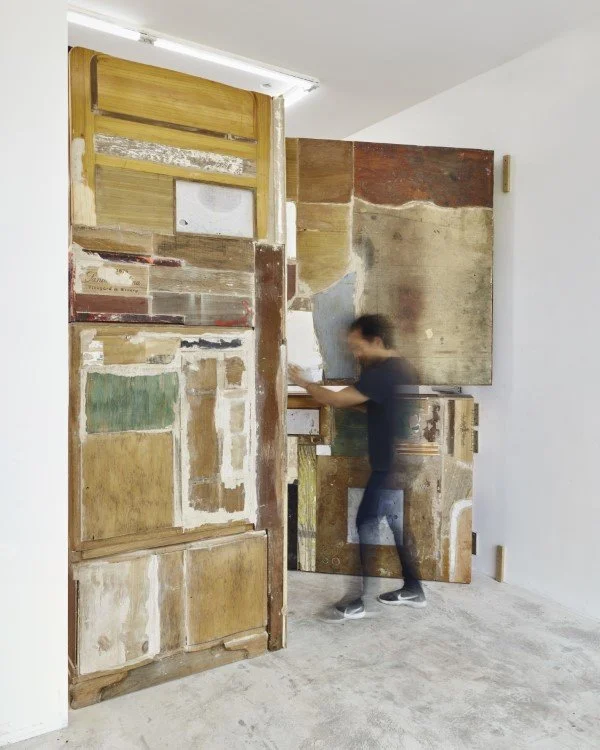
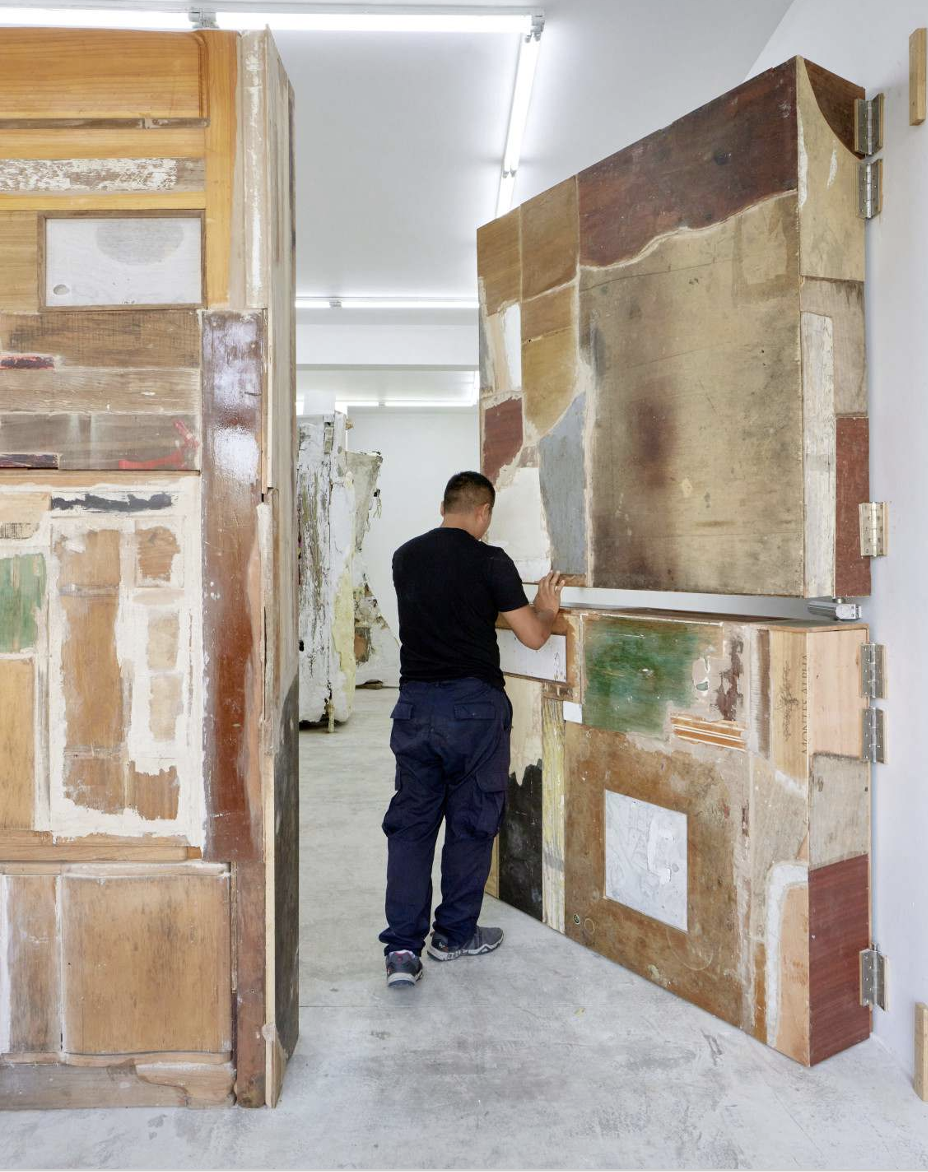
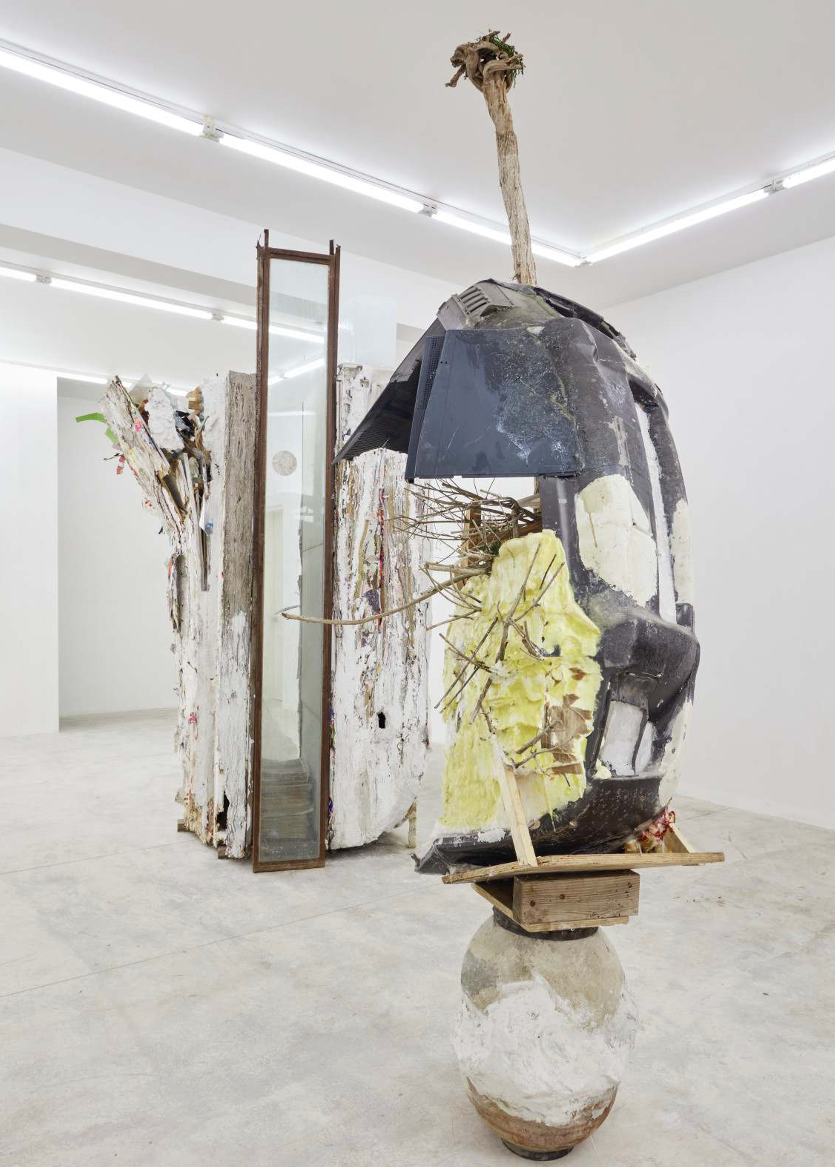
View of the exhibition "The Whiteness of the Whale," by Miguel Andrade Valdez, at Ginsberg Gallery, Lima, 2022. Photo: Juan Pablo Murrubara
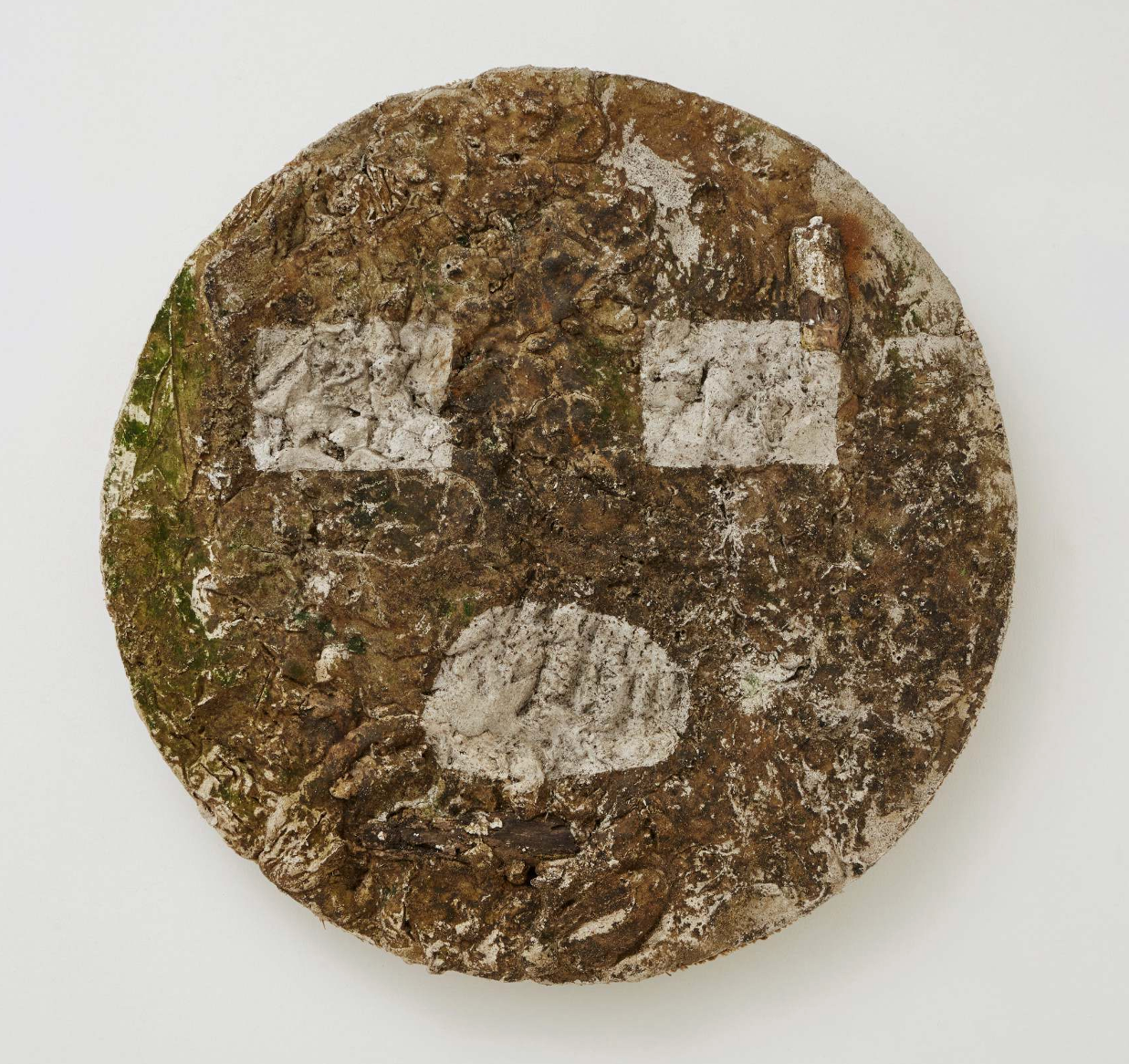
Ólmo Sara – La Última Vez | |2022 Dimentions: 90 cm × 20 cm | Wood, metals, plaster, moss and logs
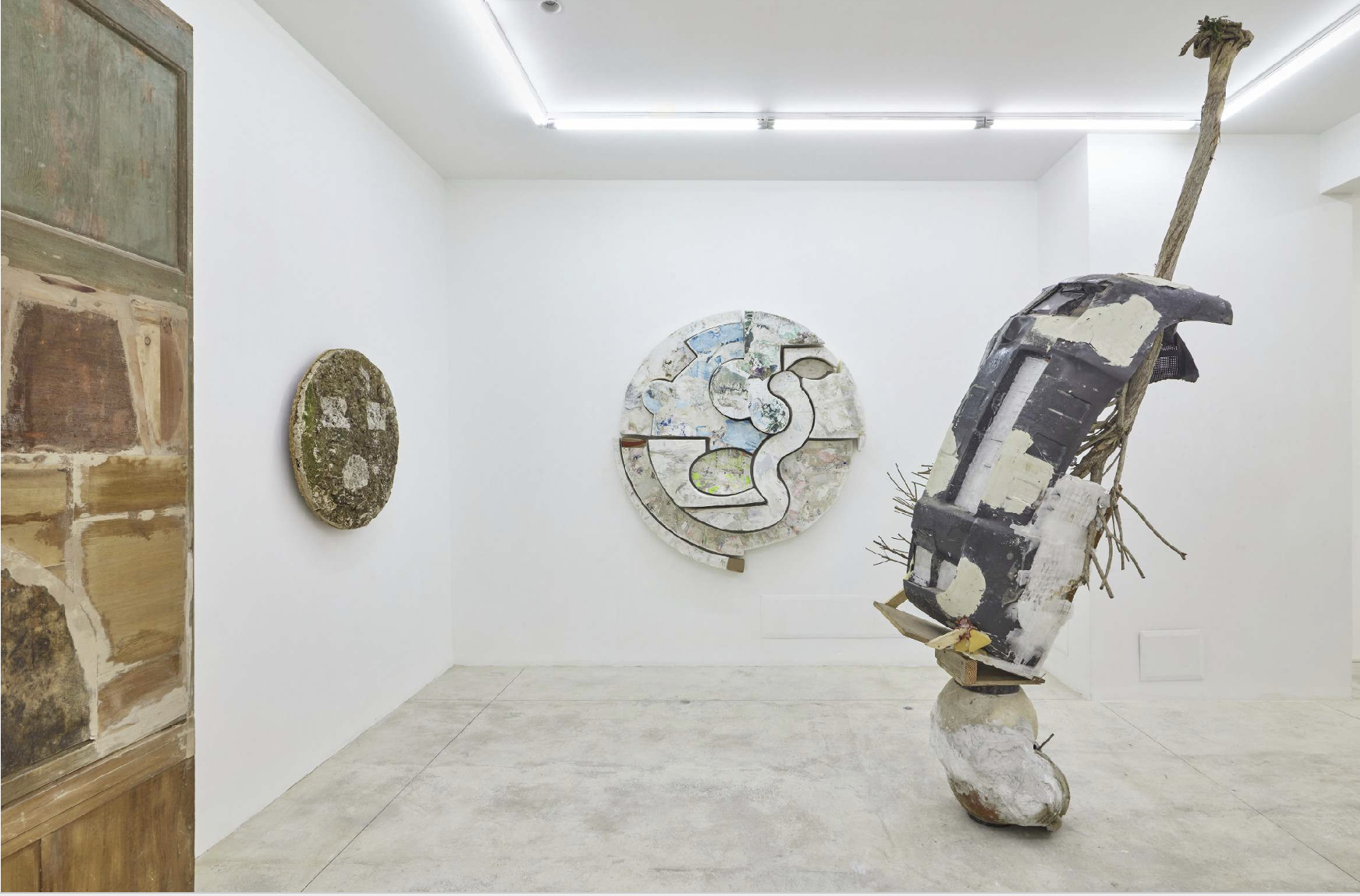
View of the exhibition "The Whiteness of the Whale," by Miguel Andrade Valdez, at Ginsberg Gallery, Lima, 2022. Photo: Juan Pablo Murrubara
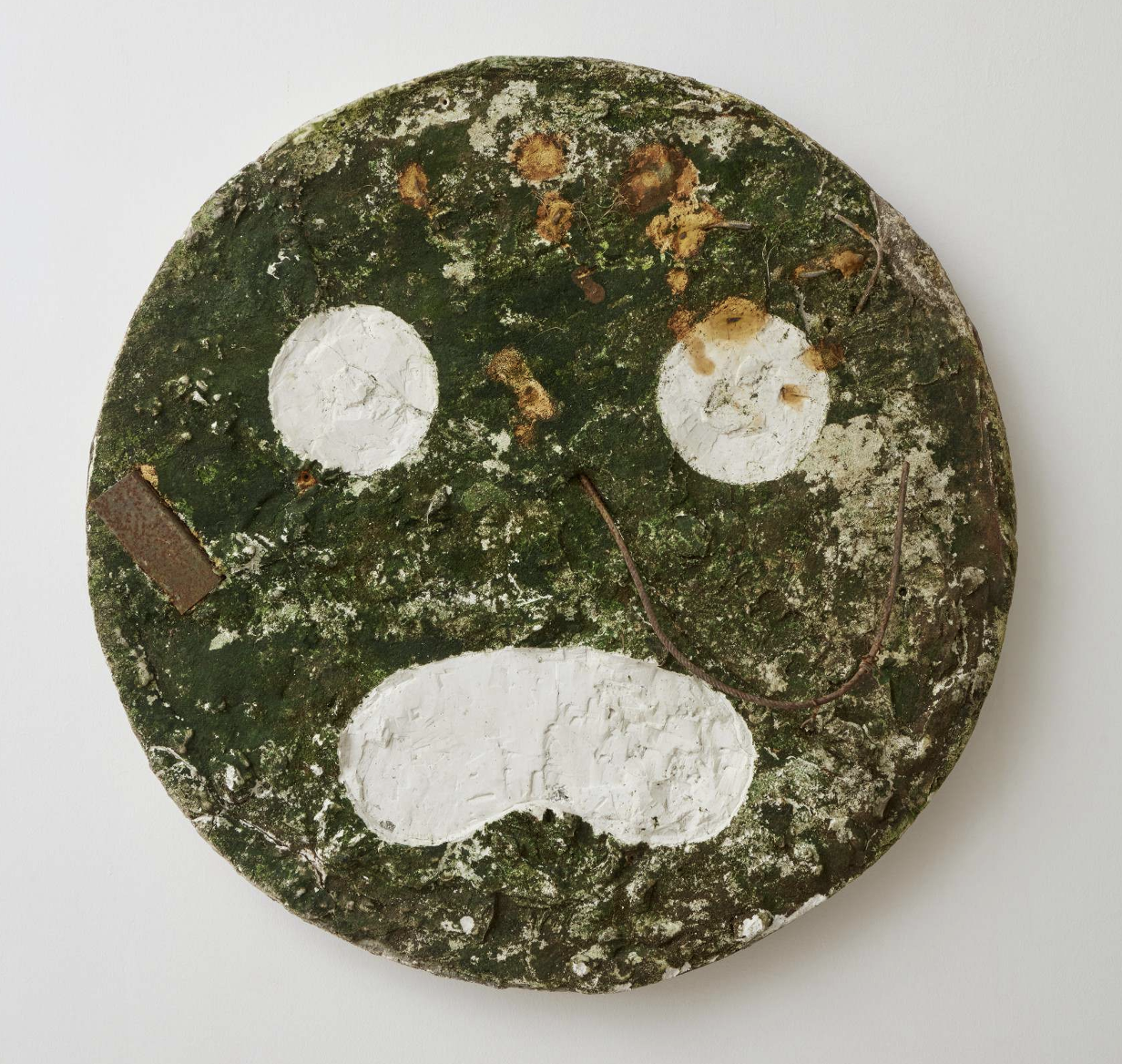
Old Nostalgia, Don’t Go | 2022 | Dimensions: 86 cm aprox. | Plaster, mortar, metals, wood, and green moss |
View of the exhibition "The Whiteness of the Whale," by Miguel Andrade Valdez, at Ginsberg Gallery, Lima, 2022. Photo: Juan Pablo Murrubara
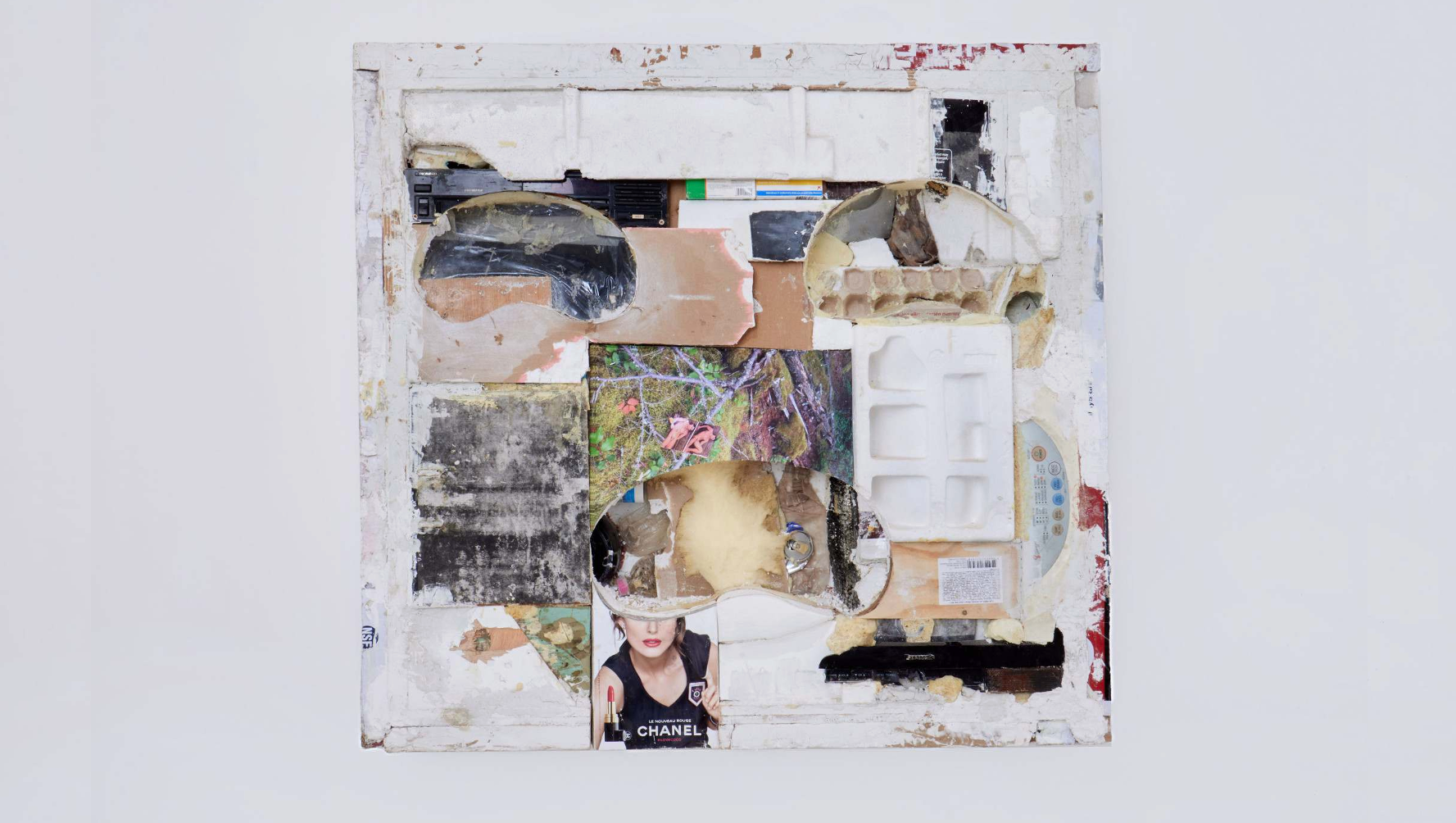
Paisaje Bucólico (Christopher, NY 2007) | 2022 | Dimensions: 123 × 112 × 23 cm | Posters, newspapers, cardboard, drywall, mattress foam, styrofoam, plastics, TV and washing machine parts, flattened bottles, pill box, plywood, branches
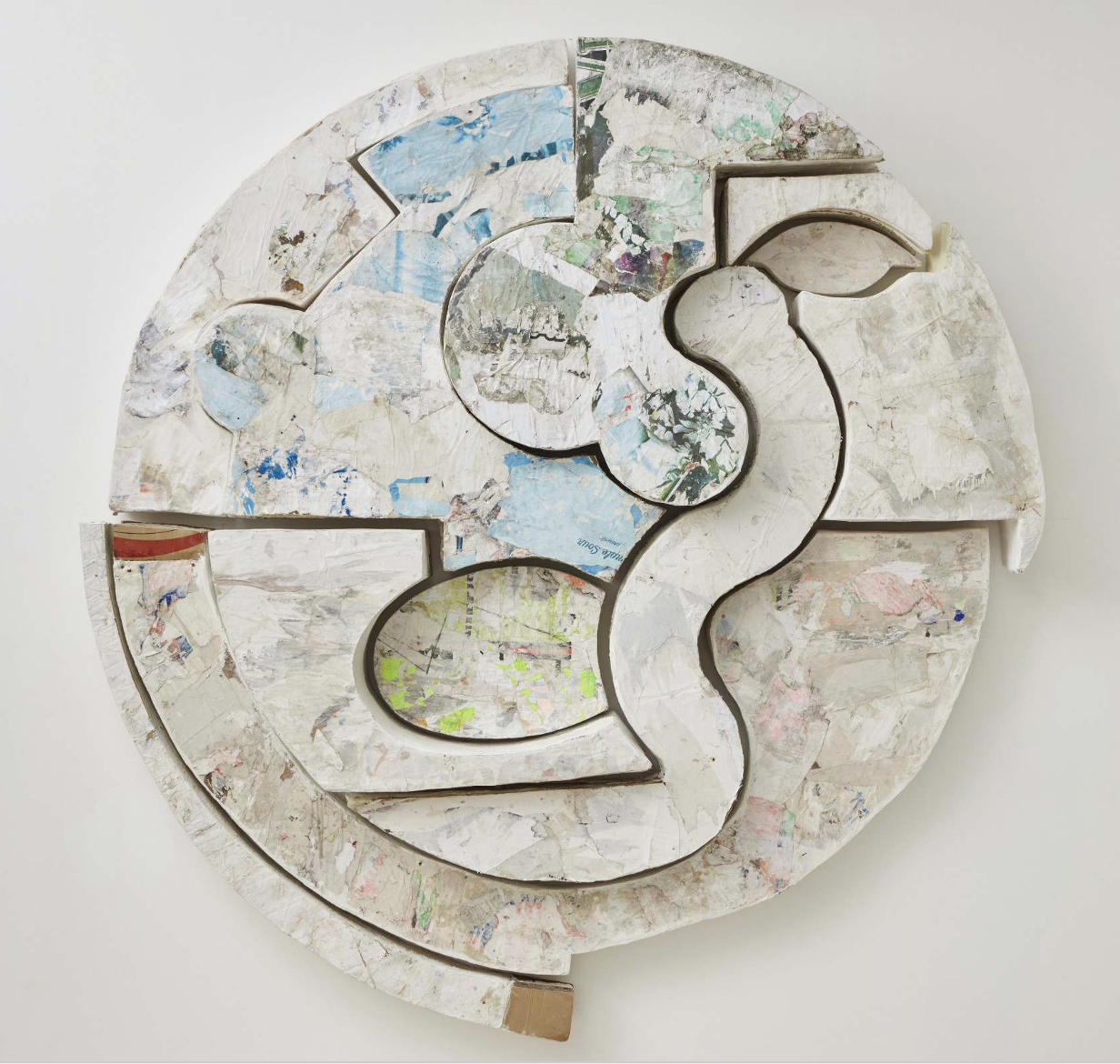
Son los ríos | 2023 | Instalación de sitio específico | Madera, metal, plástico, mangueras, bombas de agua, plantas, luces led, sonido | Medida variable |
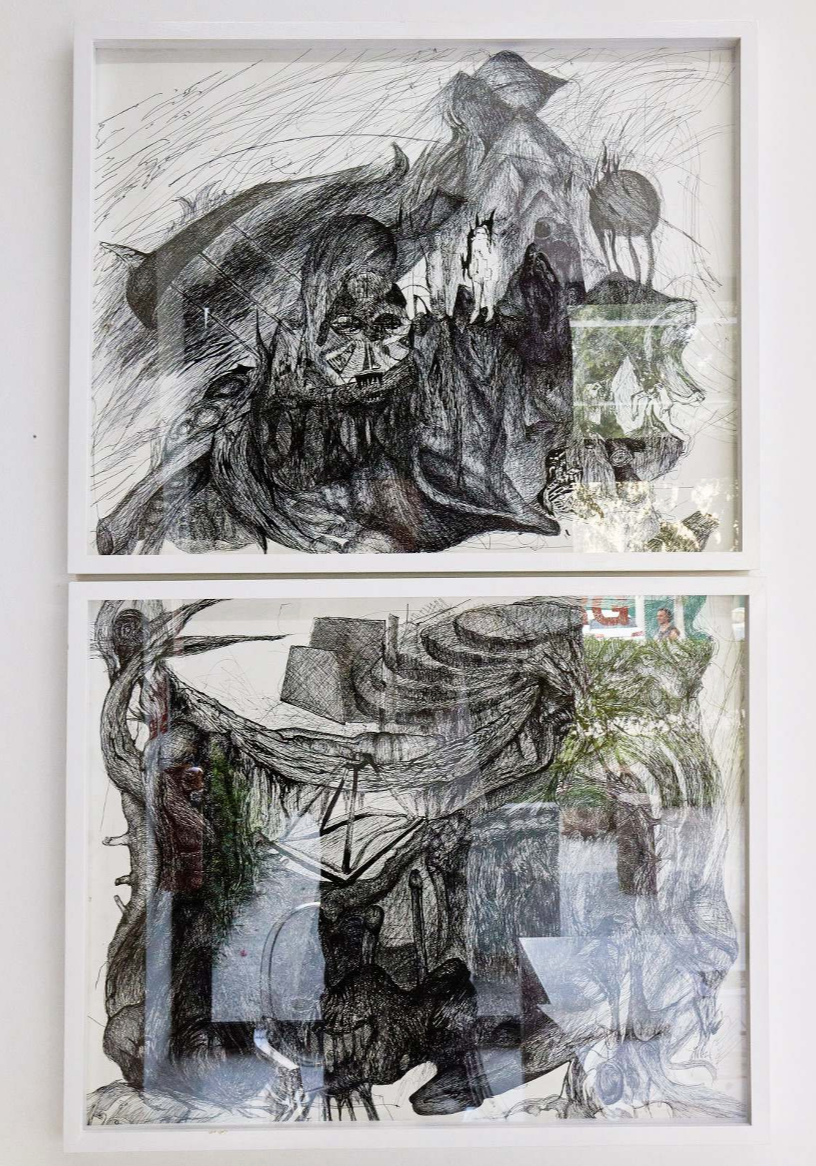
Criaturas de Adentro y Criaturas de Afuera | 2022 | 61.5 x 76 cm c/u | Tinta sobre papel (bolígrafo) |
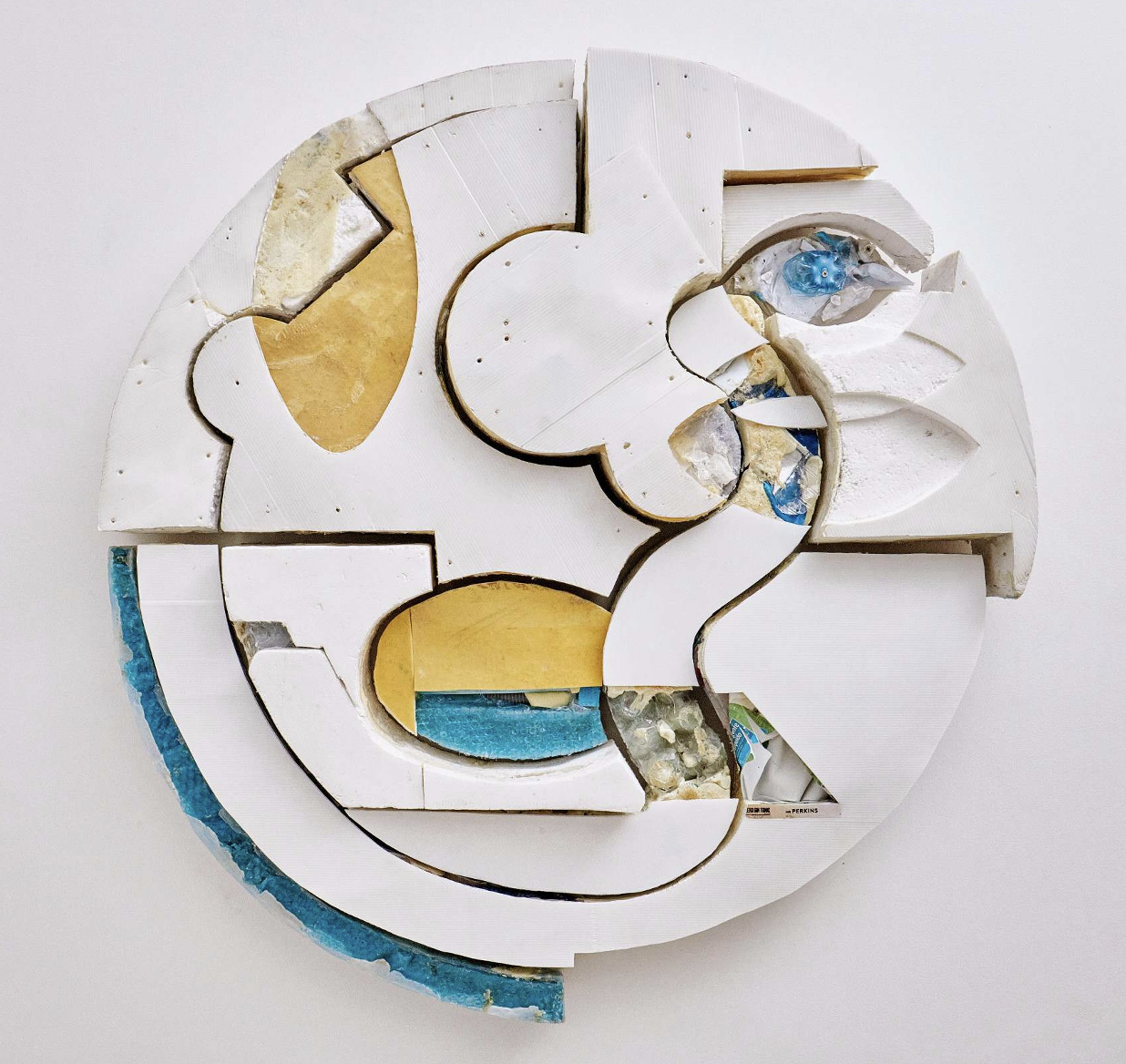
¿Son los ríos lágrimas? | 2022 | Políptico de 11 piezas. 185 cm de diámetro aprox. Triplay, cartón, afiches, tecnopor, yeso, masilla, plásticos, espuma de poliuretano
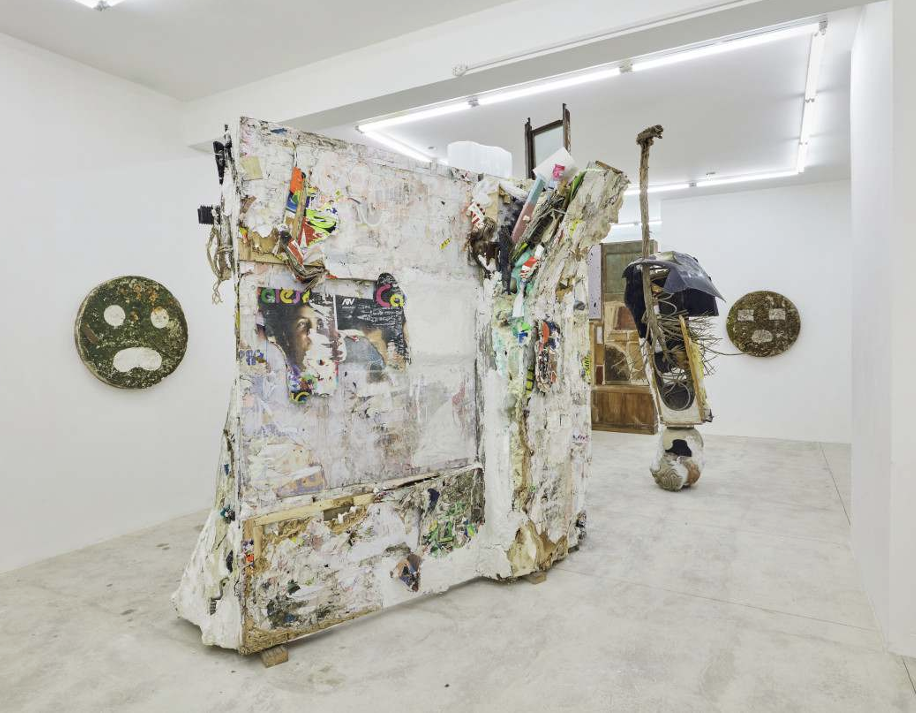
La Niña / Moby Dick II | 2022 | Dimensiones: Piece 1: 310 x 300 x 150 cm aprox. | Piece 2: 320 x 140 x 130 cm aprox | Materiales: Posters, plastics, plaster, putty, newspapers, ice, drywall, car bumper (patched), tree, paraffin, concrete spheres, rubble, glass and metal.
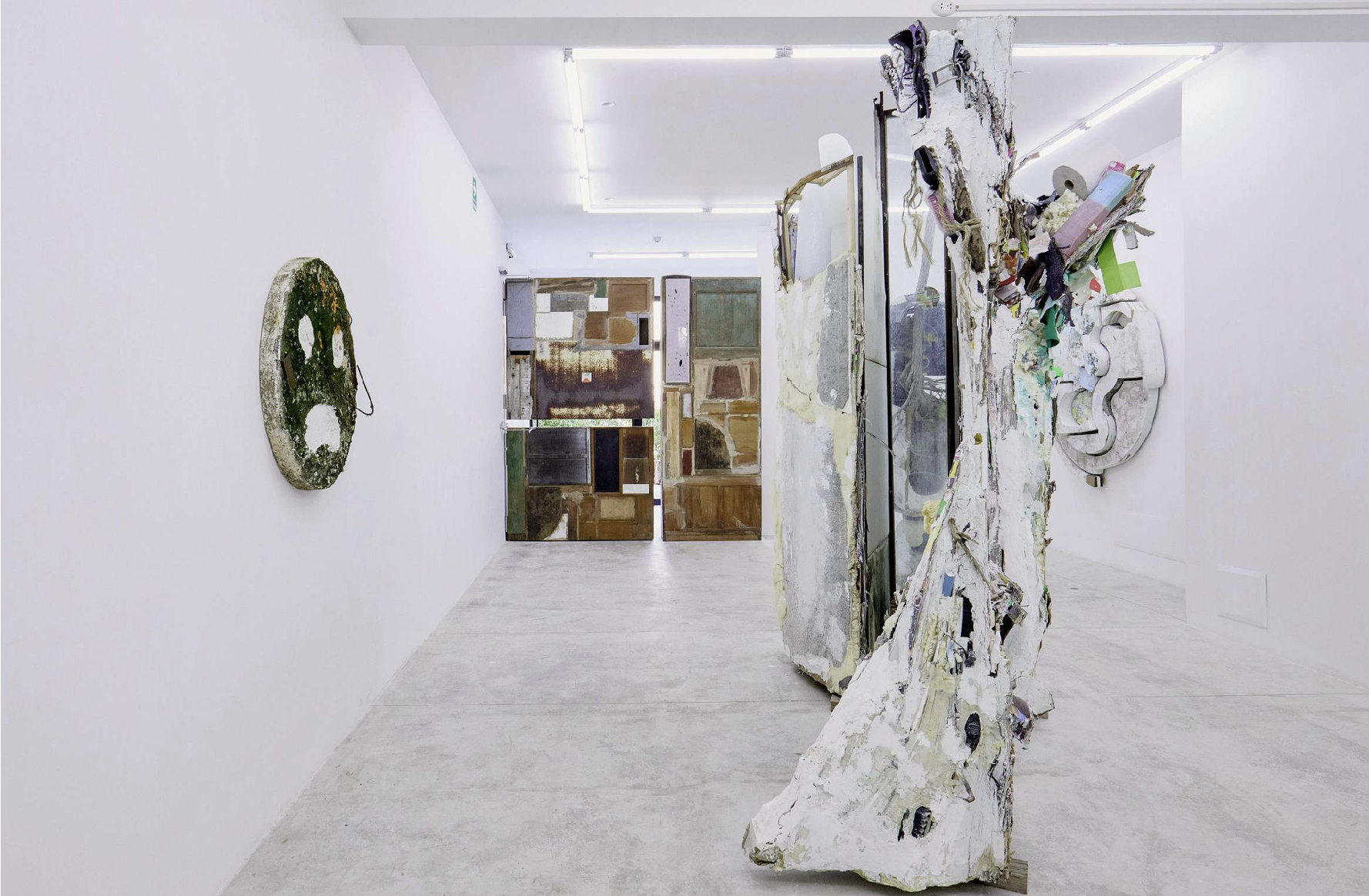
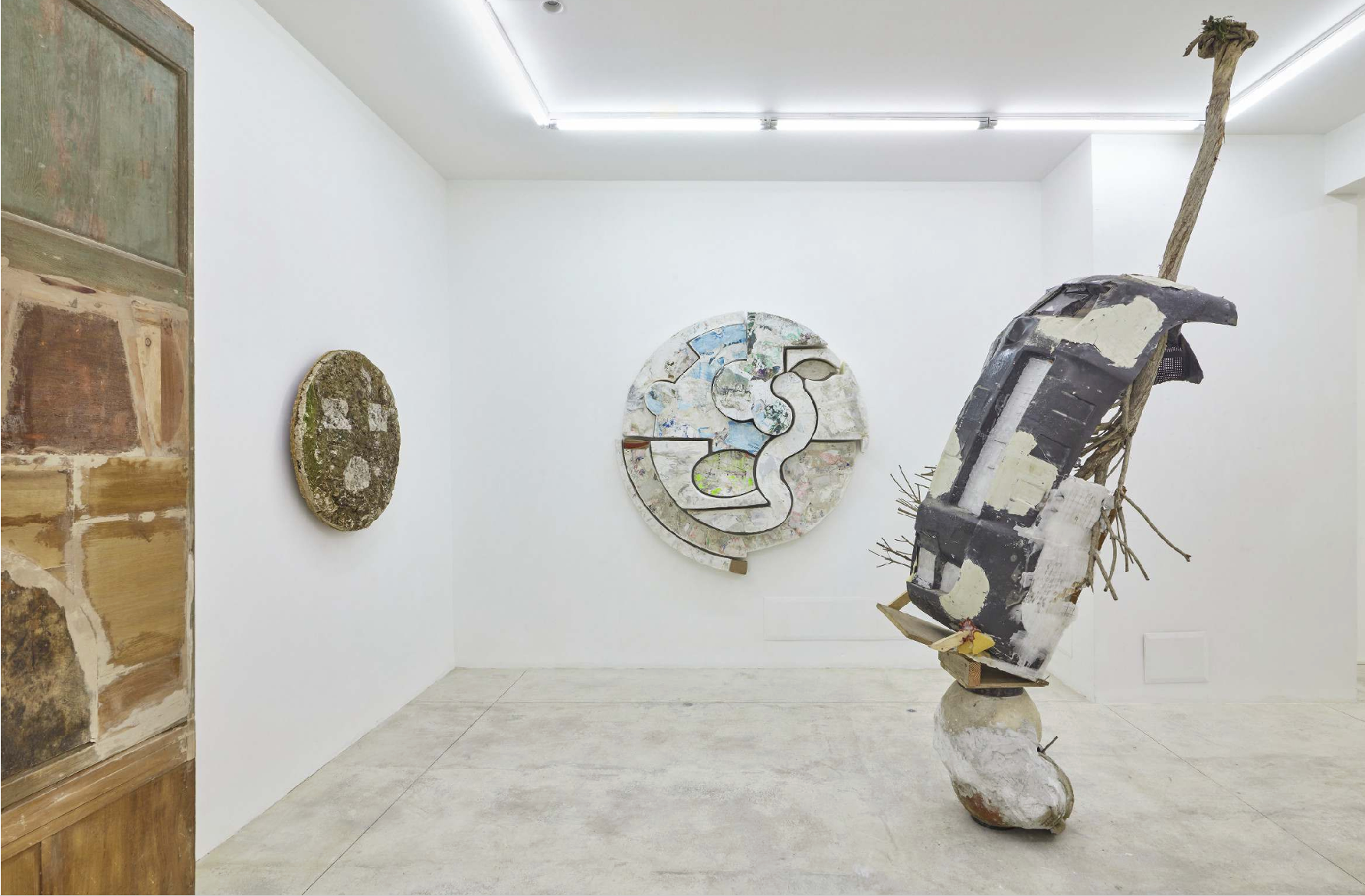
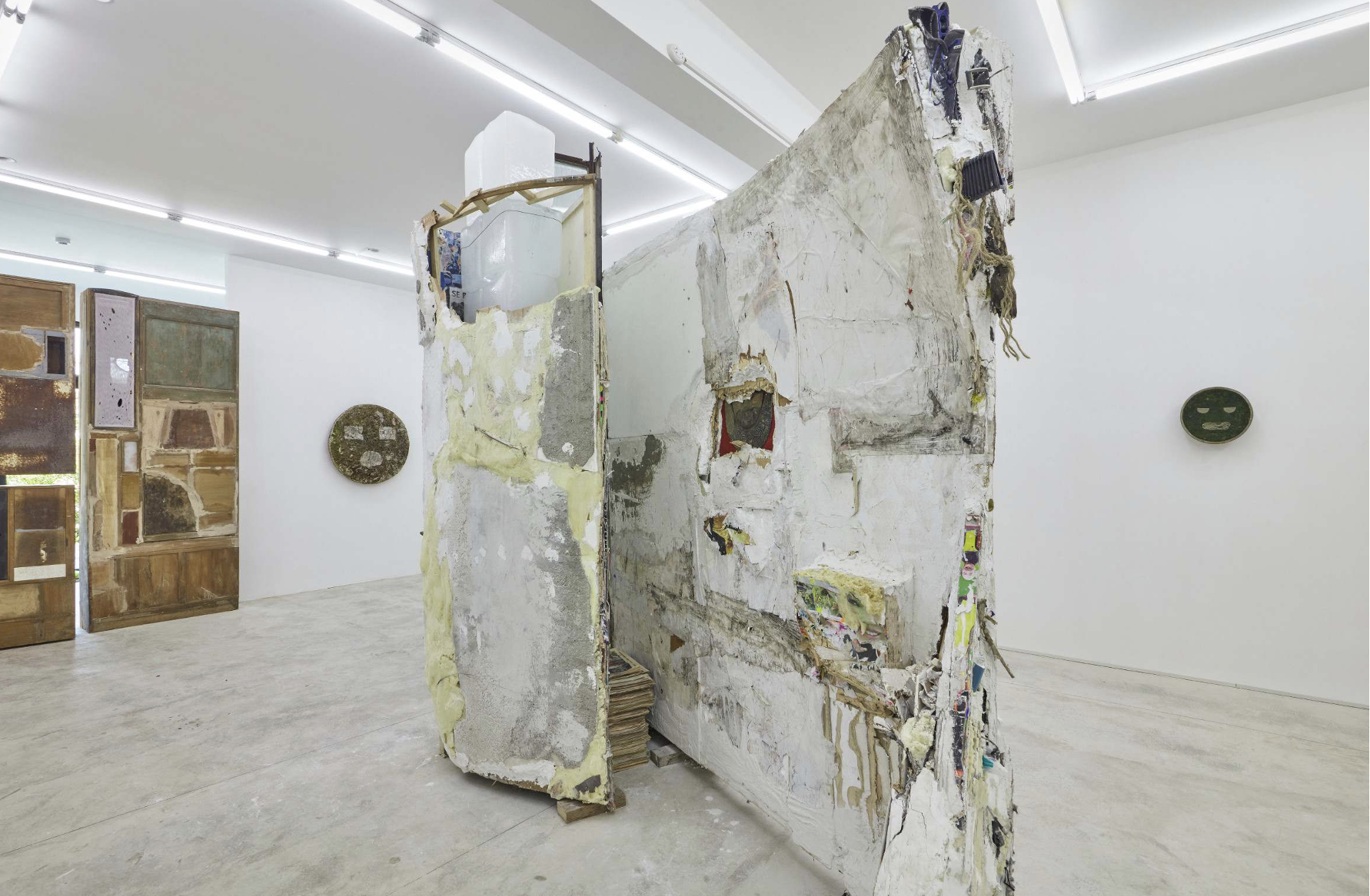
PHOTO CREDITS : Juan Pablo Murrubara